Every skill mapped
World History on Aristotle is 101 skills across 10 units, each linked to the skills it builds on.
World History
Pioneered by Stanford AI researchers and learning scientists, Aristotle is the world's first voice-based AI tutor. A full World History course, mapped skill by skill.
Trusted by families at









Features
Talk things through, work side by side, and come back next time to a tutor who remembers where you left off.
Ask questions out loud, hear explanations in Aristotle’s voice, and interrupt whenever you need to.
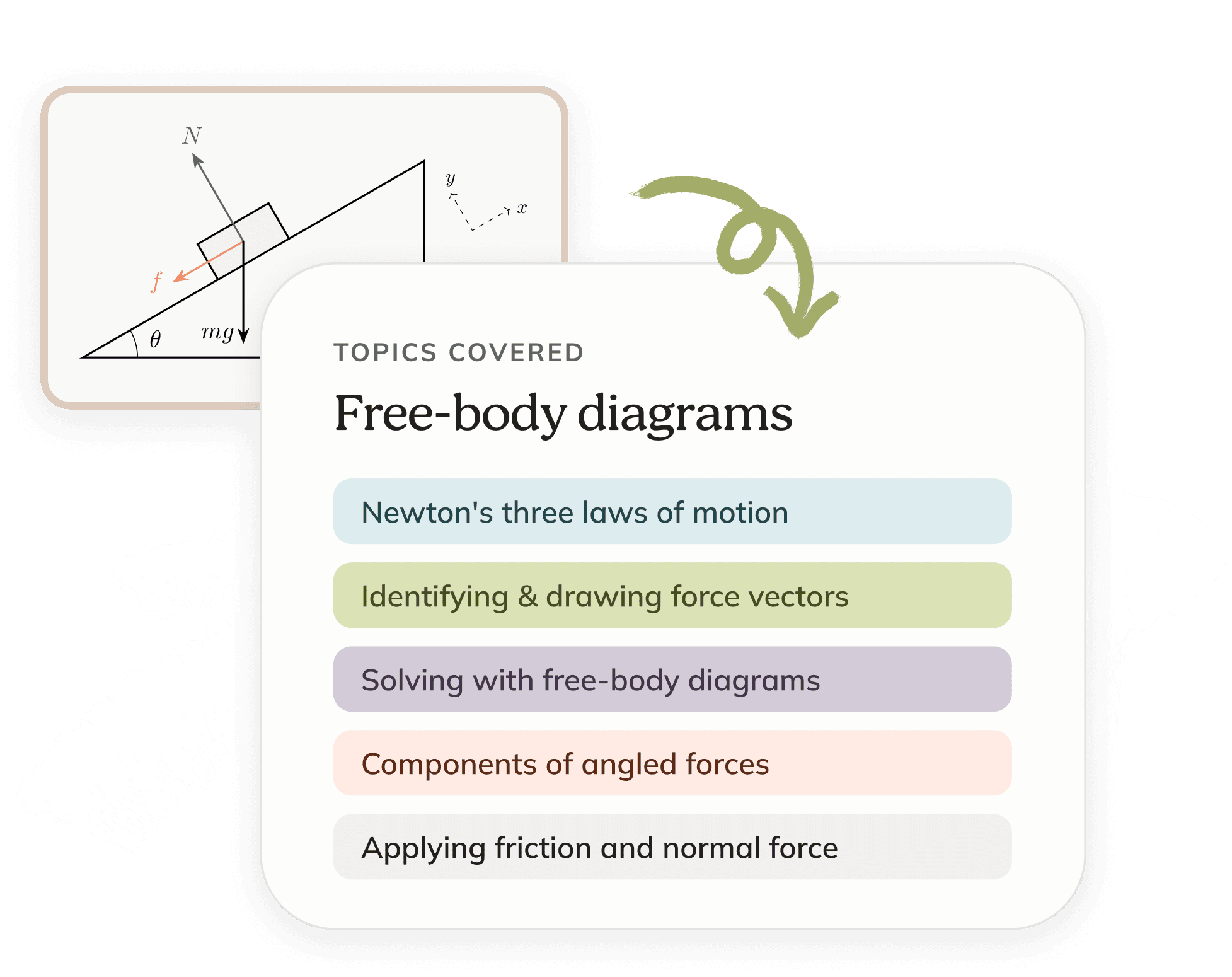
Aristotle draws steps, diagrams, and images to help you learn visually.
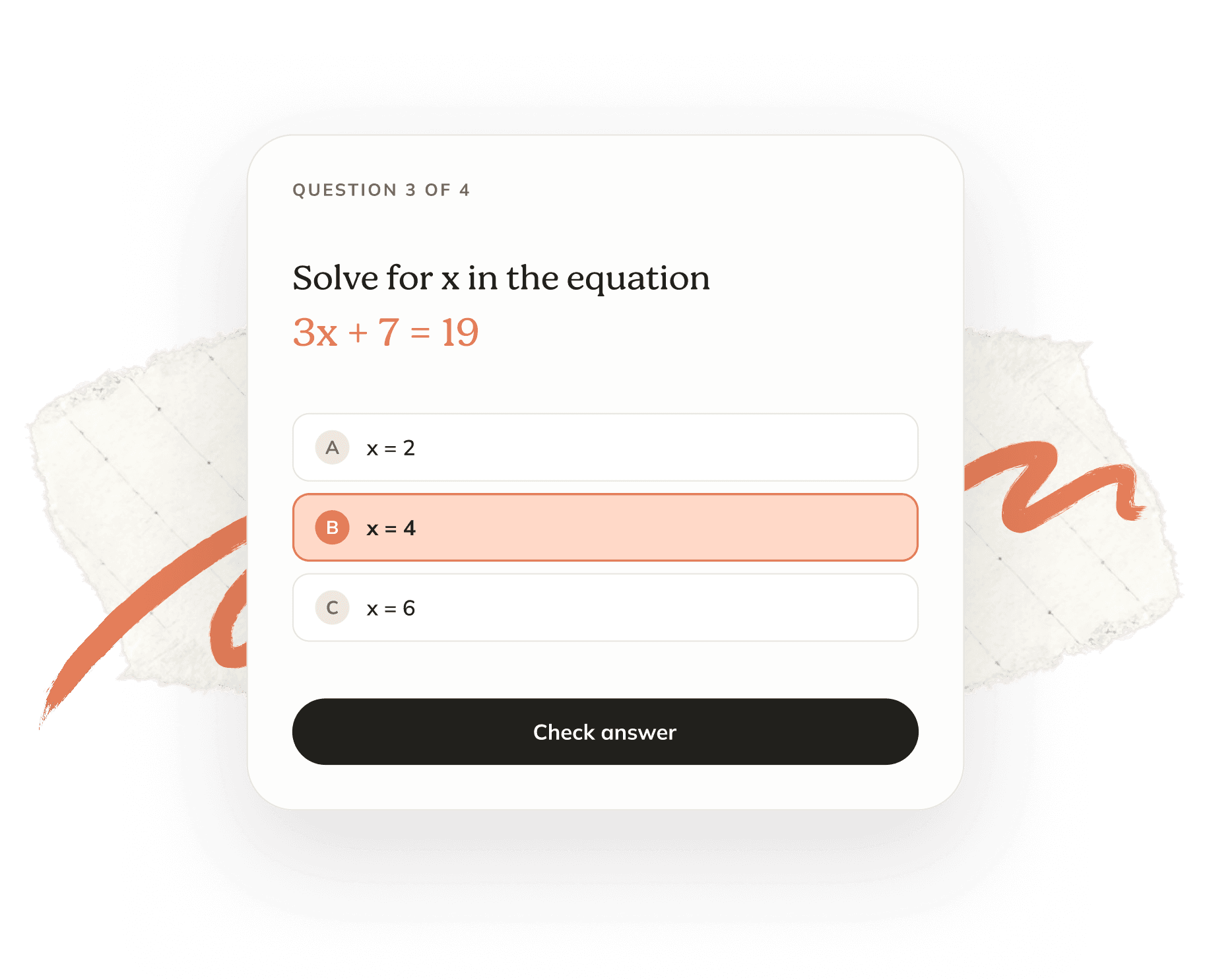
Get practice problems tailored to the exact topics you’re struggling with.
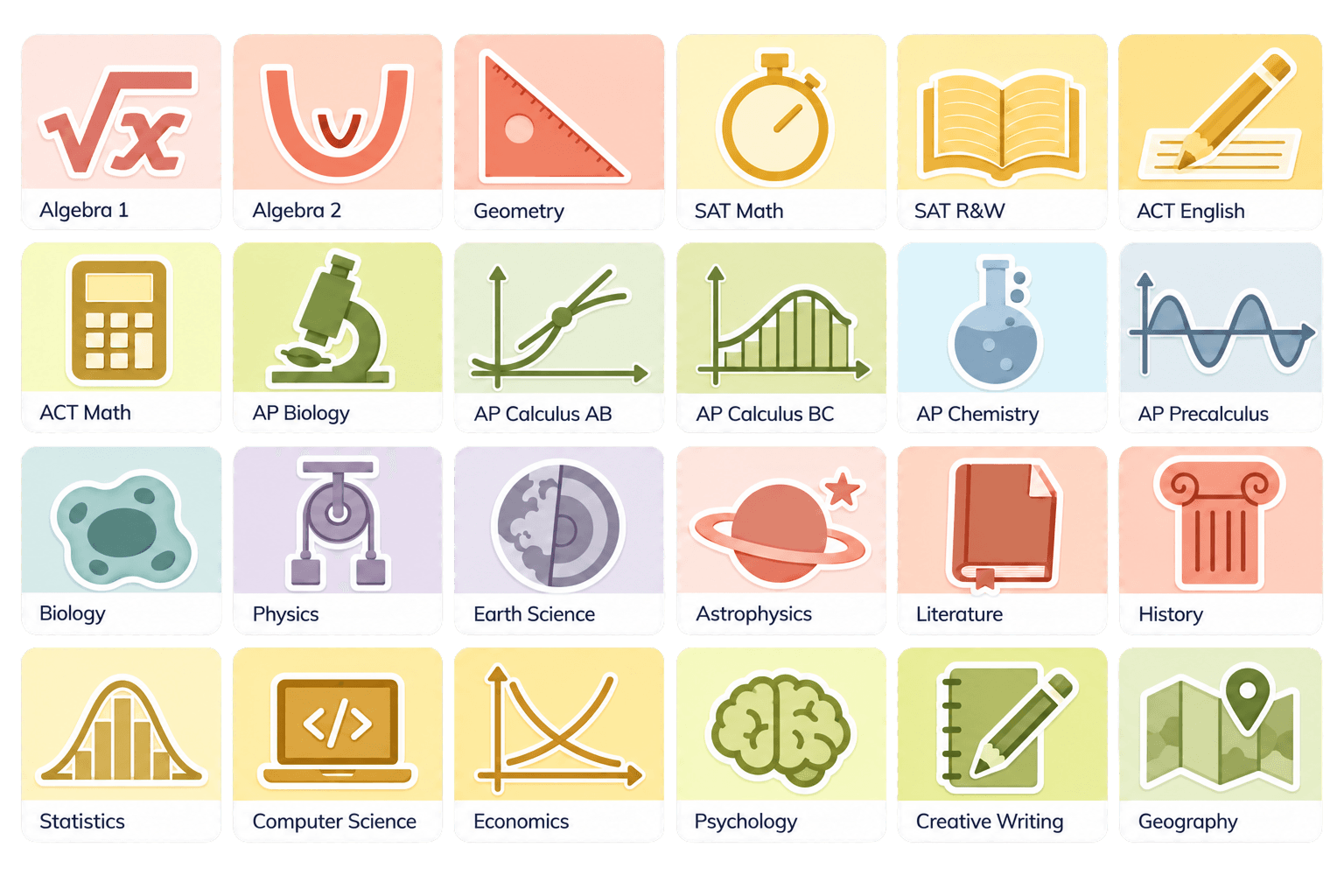
From middle-school math to AP exams to SAT/ACT prep. We also build custom plans matched to state standards and specific courses.
Revisit session summaries, session whiteboards, and uploads in one place.
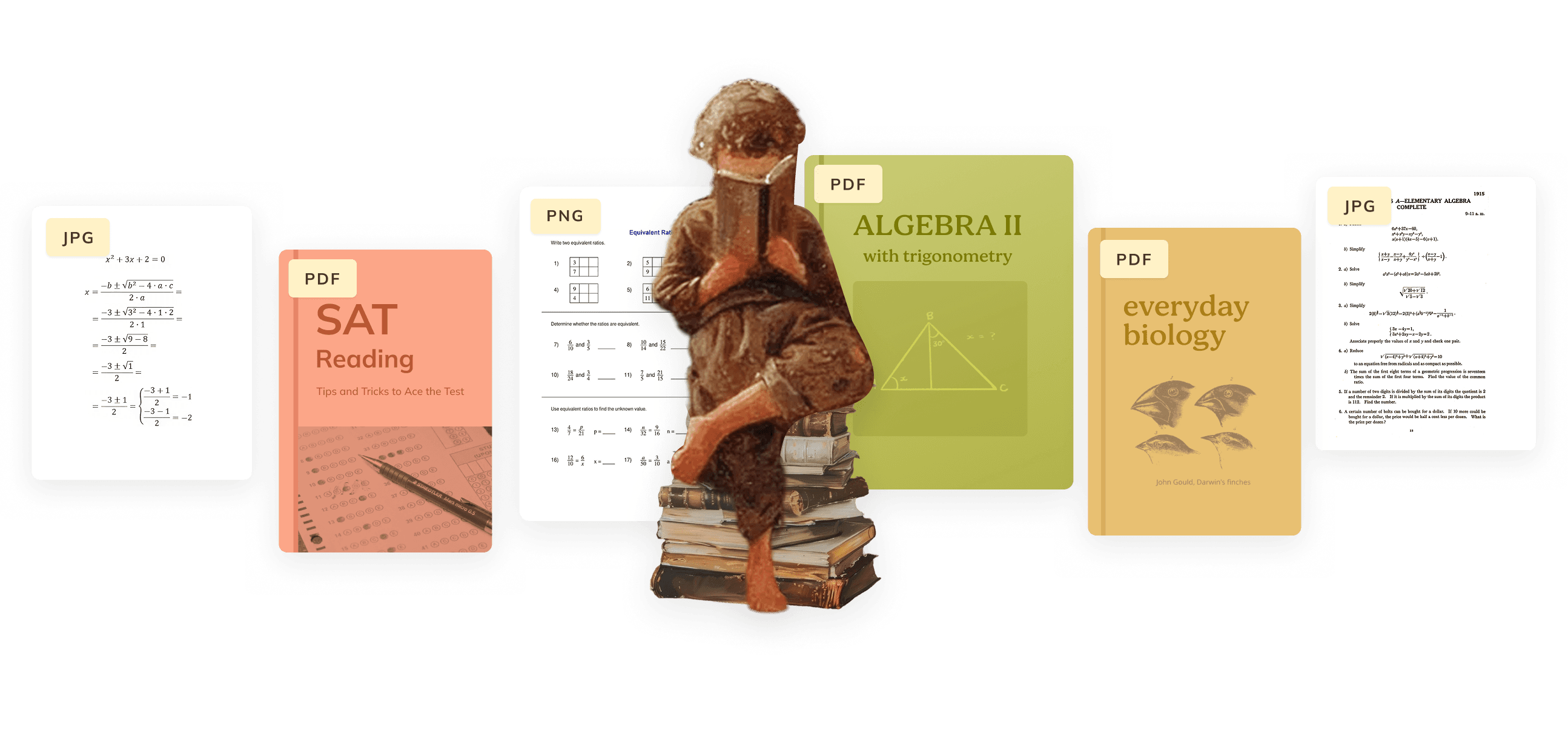
Aristotle can read and navigate any PDFs and images with the learner. That includes textbooks with hundreds of pages!
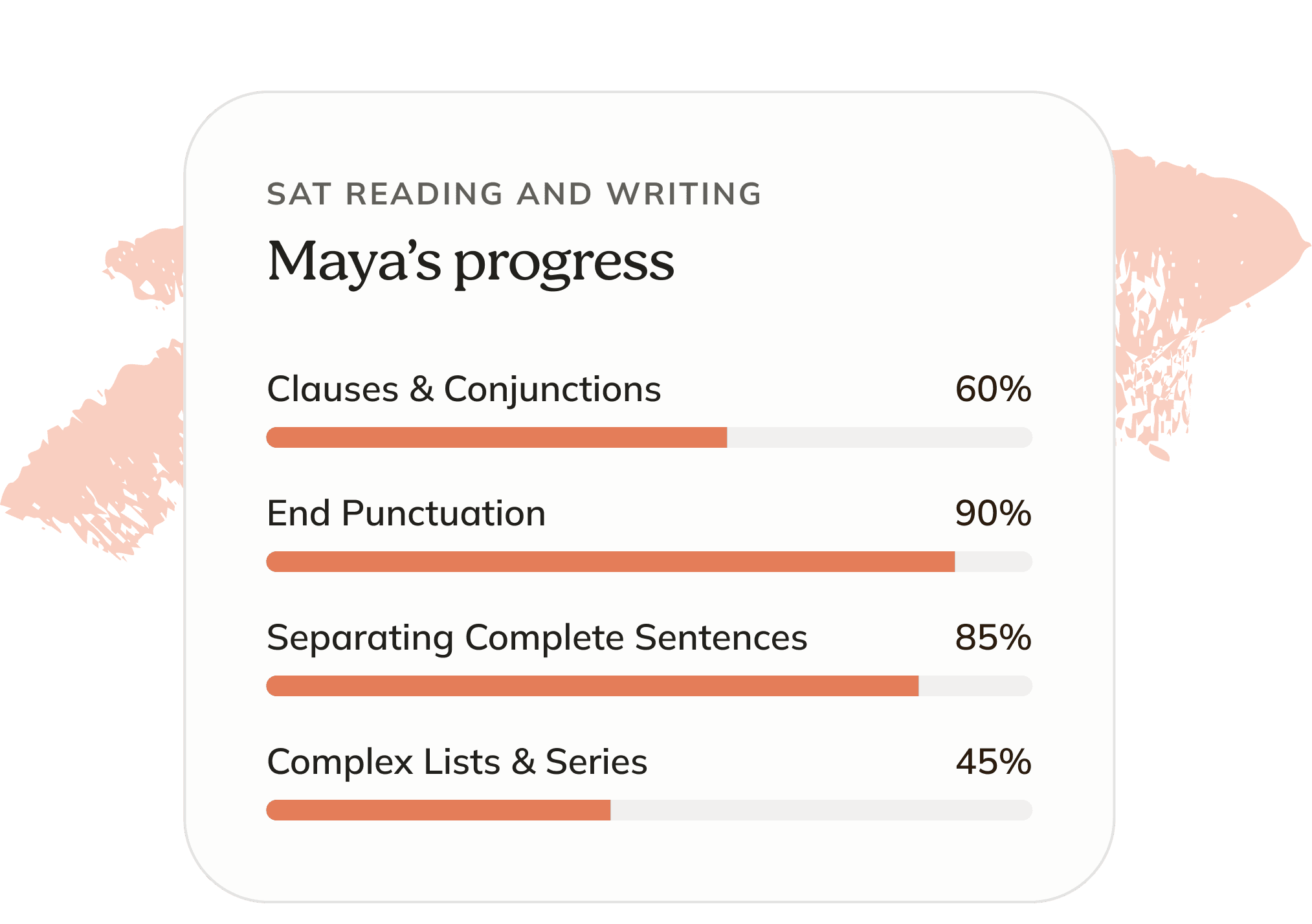
We break all subjects down into granular skills, then track mistakes and mastery on each one. Parents can see the whole picture at a glance.
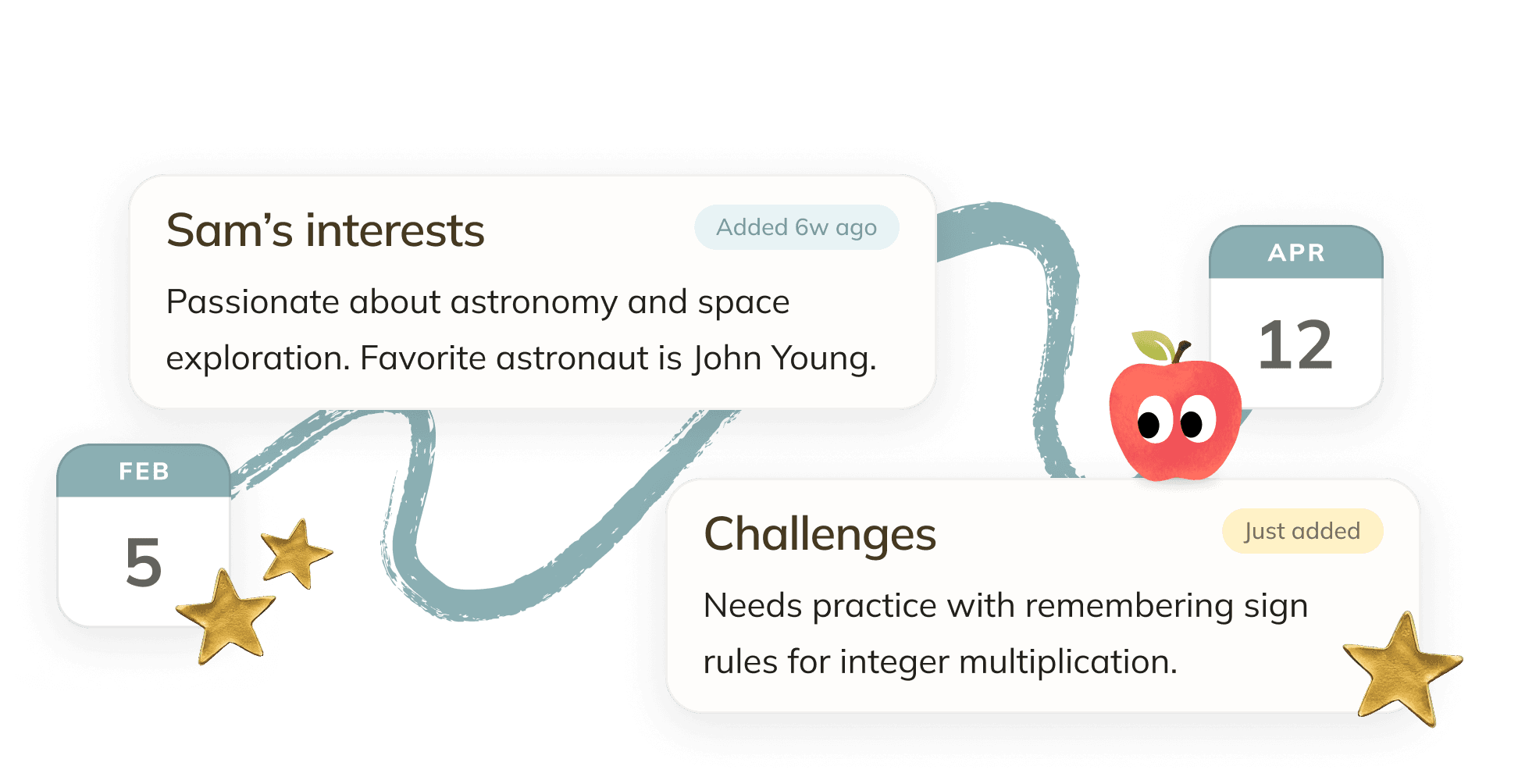
Aristotle remembers every session: what you’ve covered, where you got stuck, how you like things explained. It picks up right where you left off.
The curriculum
Aristotle is designed to always know what to teach at exactly the right time.
Sample curriculum
* Click a topic to see the skills inside
Human Origins, Farming, and the First Cities
Ancient States and New Traditions, c. 2000–300 BCE
Empires and Connected Worlds, c. 300 BCE–600 CE
New Centers of Power, c. 600–1200
Expanding Networks, c. 1200–1500
Oceanic Connections and Early Modern Empires, c. 1450–1750
Revolutions and Industrial Transformation, c. 1750–1850
Nations, Empire, and Resistance, c. 1850–1914
World Wars and Global Crisis, 1914–1945
Decolonization, Cold War, and the Contemporary World
World History tutoring curriculum101 skills across 10 units
Human Origins, Farming, and the First Cities
Follow the spread of humans and the varied paths toward farming and urban life. Topics: Migration and Ways of Life, Agriculture in Several Parts of the World, Mesopotamia, Egypt, and the Indus World.
Ancient States and New Traditions, c. 2000–300 BCE
Explore state power and major intellectual and religious traditions in their historical settings. Topics: Shang, Zhou, and Competing Ideas in China, South Asia: Vedic Traditions, Buddhism, and Jainism, Persia, Greece, and the Hebrew Traditions.
Empires and Connected Worlds, c. 300 BCE–600 CE
Compare large states and the networks that connected and outlasted them. Topics: Rome and Han China, Maurya and Gupta South Asia, Trade Routes and Religious Communities.
New Centers of Power, c. 600–1200
Explore flourishing societies across Africa, Eurasia, and the Americas. Topics: The Rise of Islam and Islamic Societies, Tang and Song China, Korea, and Japan, Byzantium and Medieval Europe, African Kingdoms and American Cities, South and Southeast Asia in the Indian Ocean.
Expanding Networks, c. 1200–1500
Follow movement, empire, disease, and regional achievements before sustained Atlantic exchange. Topics: The Mongol Empires, Mali, Swahili Cities, and Great Zimbabwe, Mexica, Inca, and Pacific Voyagers, Plague, Renaissance, and Changing States.
Oceanic Connections and Early Modern Empires, c. 1450–1750
Trace encounters that reshaped ecology, labor, religion, and political power. Topics: Atlantic Conquest and the Columbian Exchange, The Atlantic Slave Trade and Plantation Worlds, Ottoman, Safavid, Mughal, Ming, and Qing Worlds, Reformation, Scientific Inquiry, and Enlightenment.
Revolutions and Industrial Transformation, c. 1750–1850
Examine the changing meanings of rights, production, and independence. Topics: American, French, Haitian, and Latin American Revolutions, Steam, Factories, and Industrial Societies.
Nations, Empire, and Resistance, c. 1850–1914
Connect nation-building and global integration to coercion and resistance. Topics: Nation-Building and State Reform, Imperial Expansion and Anticolonial Resistance.
World Wars and Global Crisis, 1914–1945
Follow wars, revolutions, depression, dictatorship, and mass violence through their connected consequences. Topics: World War I and the Russian Revolutions, Depression, Fascism, and Stalinism, World War II and the Holocaust.
Decolonization, Cold War, and the Contemporary World
Connect new states and social movements to rivalry, economic change, and shared global problems. Topics: Cold War Rivalry and Its Limits, Decolonization and New Political Orders, Global Connections and Shared Challenges.
My son told me yesterday that we should cancel his human tutor, because Aristotle is doing a better job. The human tutor was $250/hour.

A few things you might wonder before getting started.
Aristotle's World History course tracks 101 skills across 10 units, including Human Origins, Farming, and the First Cities, Ancient States and New Traditions, c. 2000–300 BCE, and Empires and Connected Worlds, c. 300 BCE–600 CE. Every skill is linked to the skills it builds on, so the tutor always knows which parts of World History your child has mastered and what to teach next.
Check out our most recent blog posts.
This could be you
For homework, supporting your child, or anything you’ve always wanted to know more about, Aristotle makes it easy for anyone to learn out loud.