Every skill mapped
Probability on Aristotle is 98 skills across 7 units, each linked to the skills it builds on.

Probability
Pioneered by Stanford AI researchers and learning scientists, Aristotle is the world's first voice-based AI tutor. A full Probability course, mapped skill by skill.
Trusted by families at









Fits your child's Probability class
Probability on Aristotle is 98 skills across 7 units, each linked to the skills it builds on.
Share a syllabus, textbook, or reading list and sessions follow it, or let Aristotle lead the way through the course.
Aristotle moves on when a skill is mastered and slows down when it isn't, so no time goes to what your child already knows.
Features
Talk things through, work side by side, and come back next time to a tutor who remembers where you left off.
Ask questions out loud, hear explanations in Aristotle’s voice, and interrupt whenever you need to.
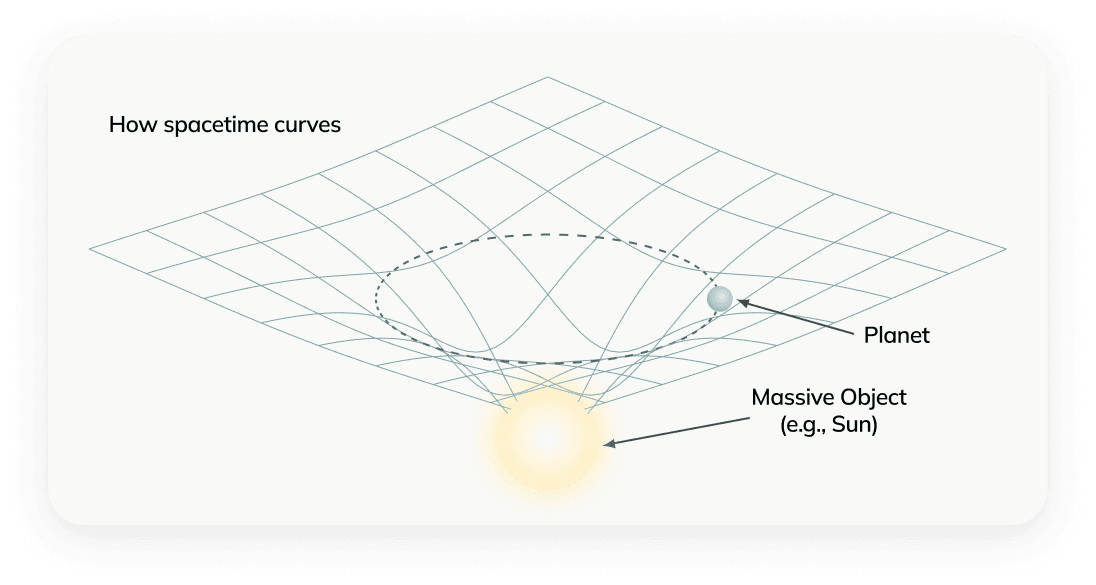
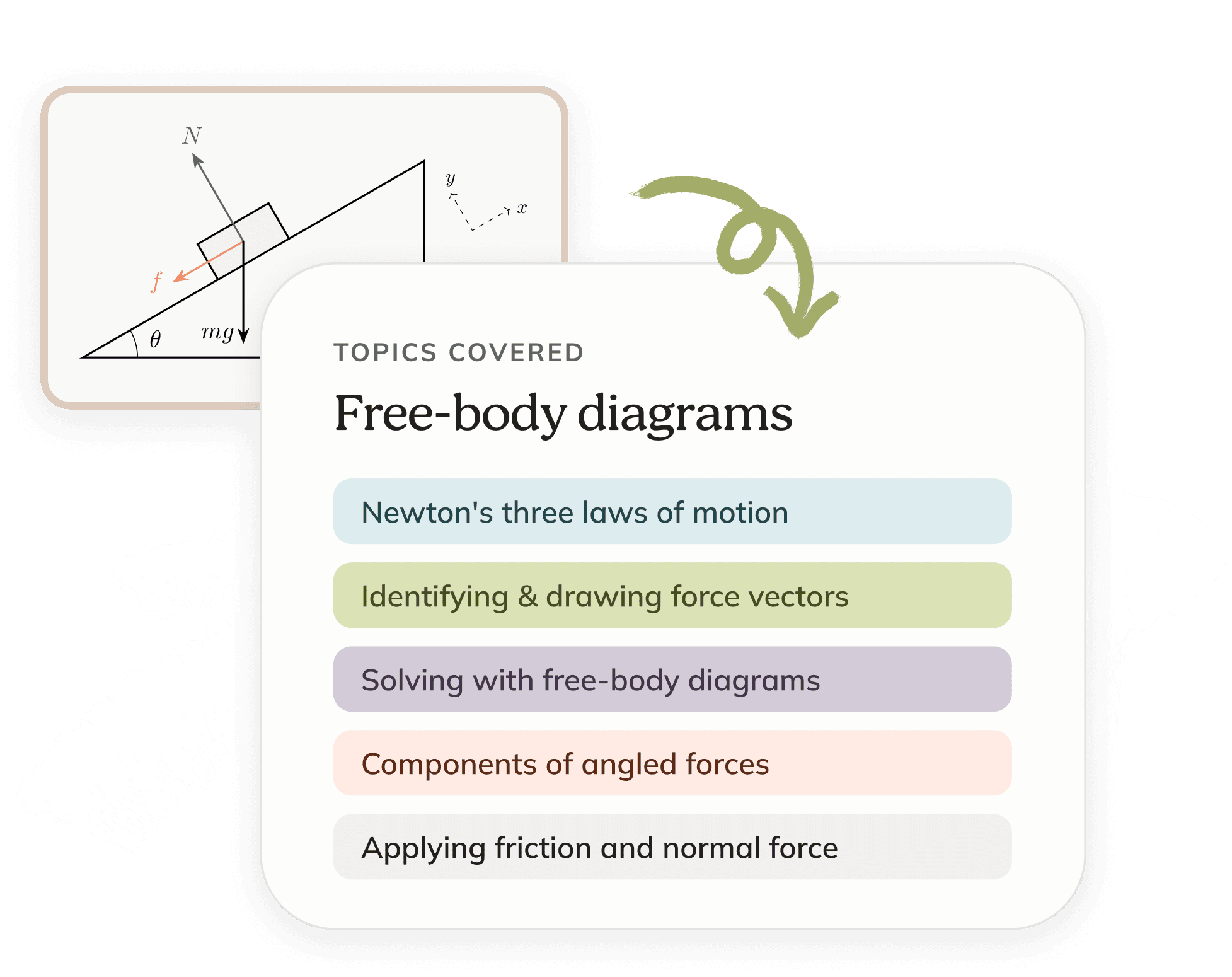
Aristotle draws steps, diagrams, and images to help you learn visually.
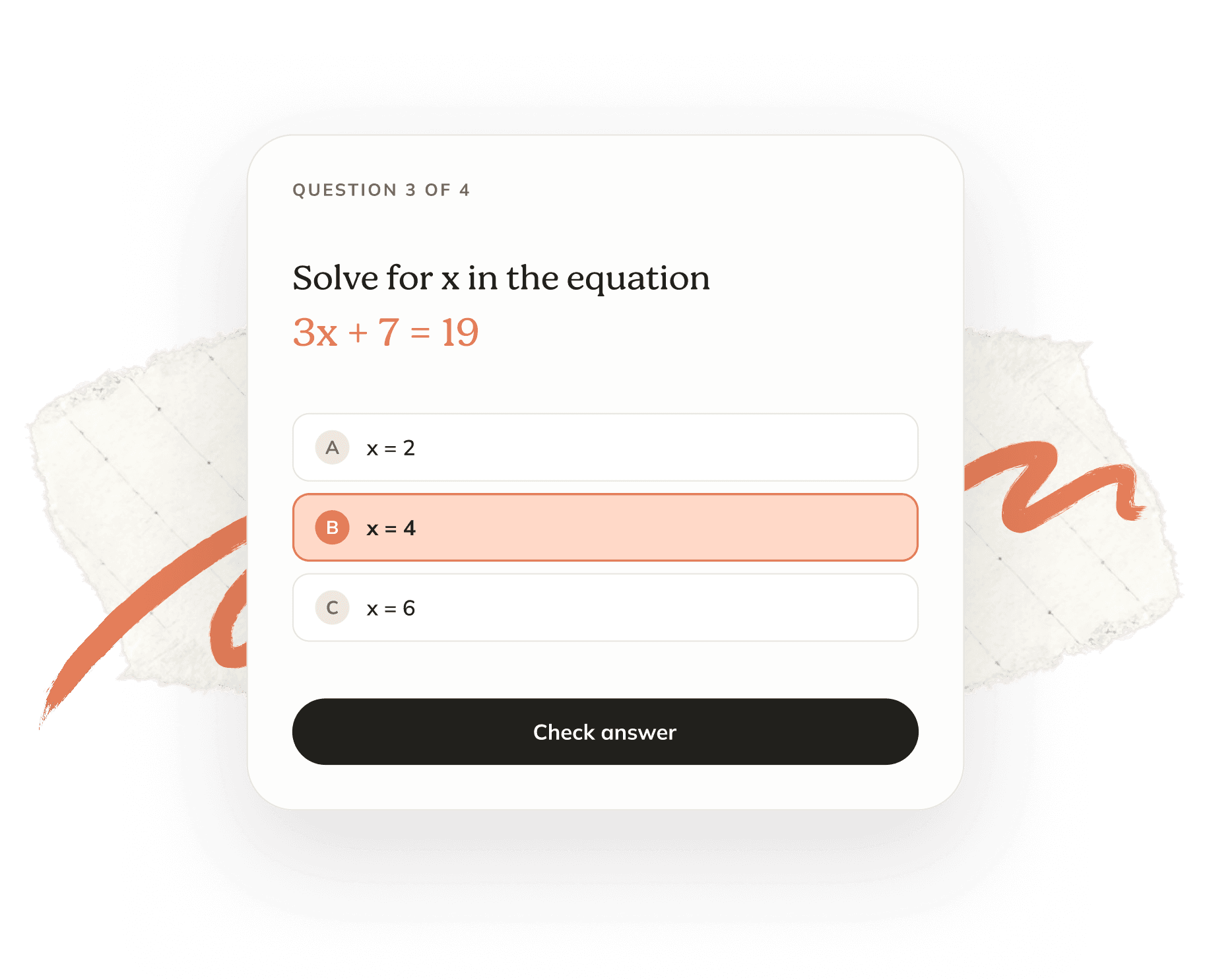
Get practice problems tailored to the exact topics you’re struggling with.
From middle-school math to AP exams to SAT/ACT prep. We also build custom plans matched to state standards and specific courses.
Revisit session summaries, session whiteboards, and uploads in one place.
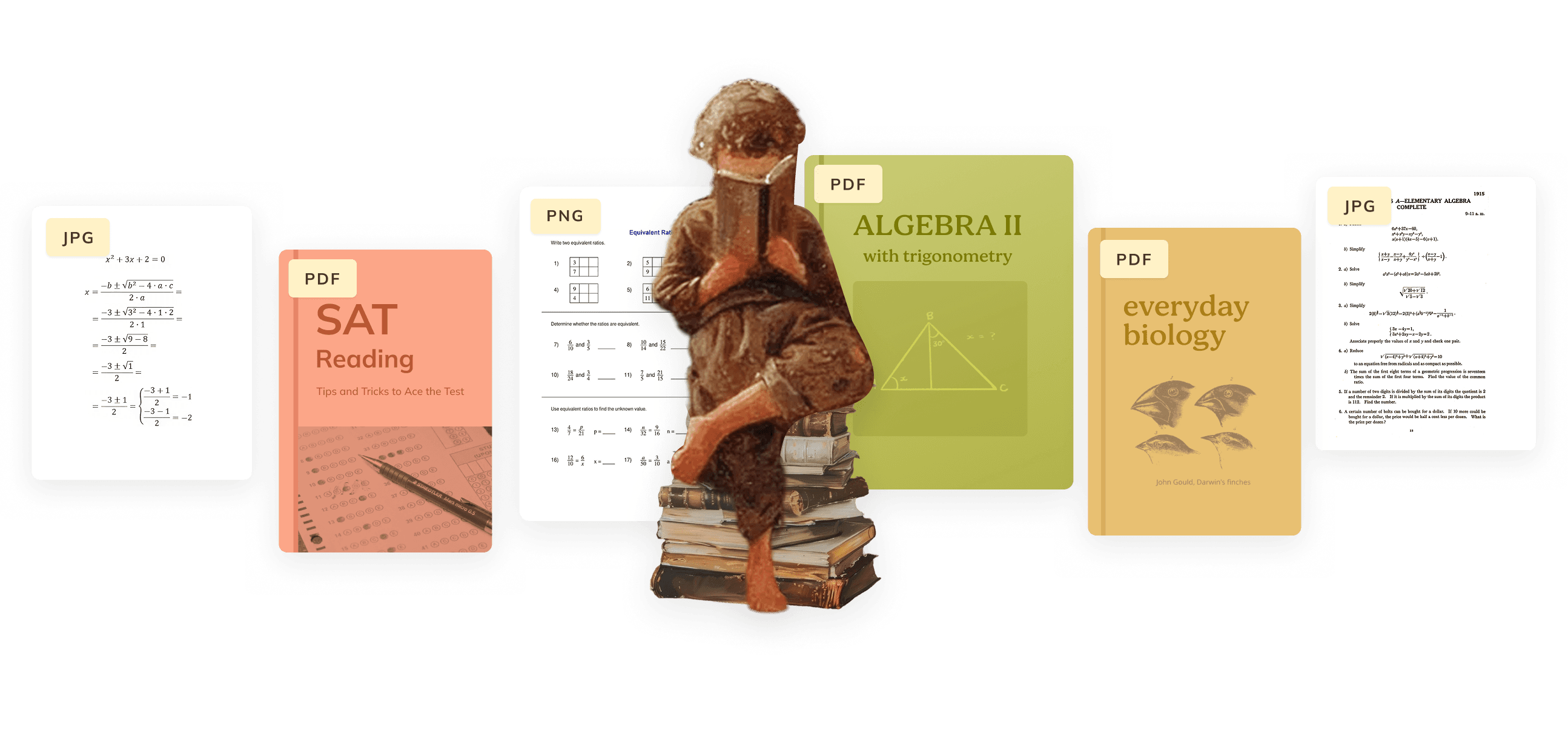
Aristotle can read and navigate any PDFs and images with the learner. That includes textbooks with hundreds of pages!
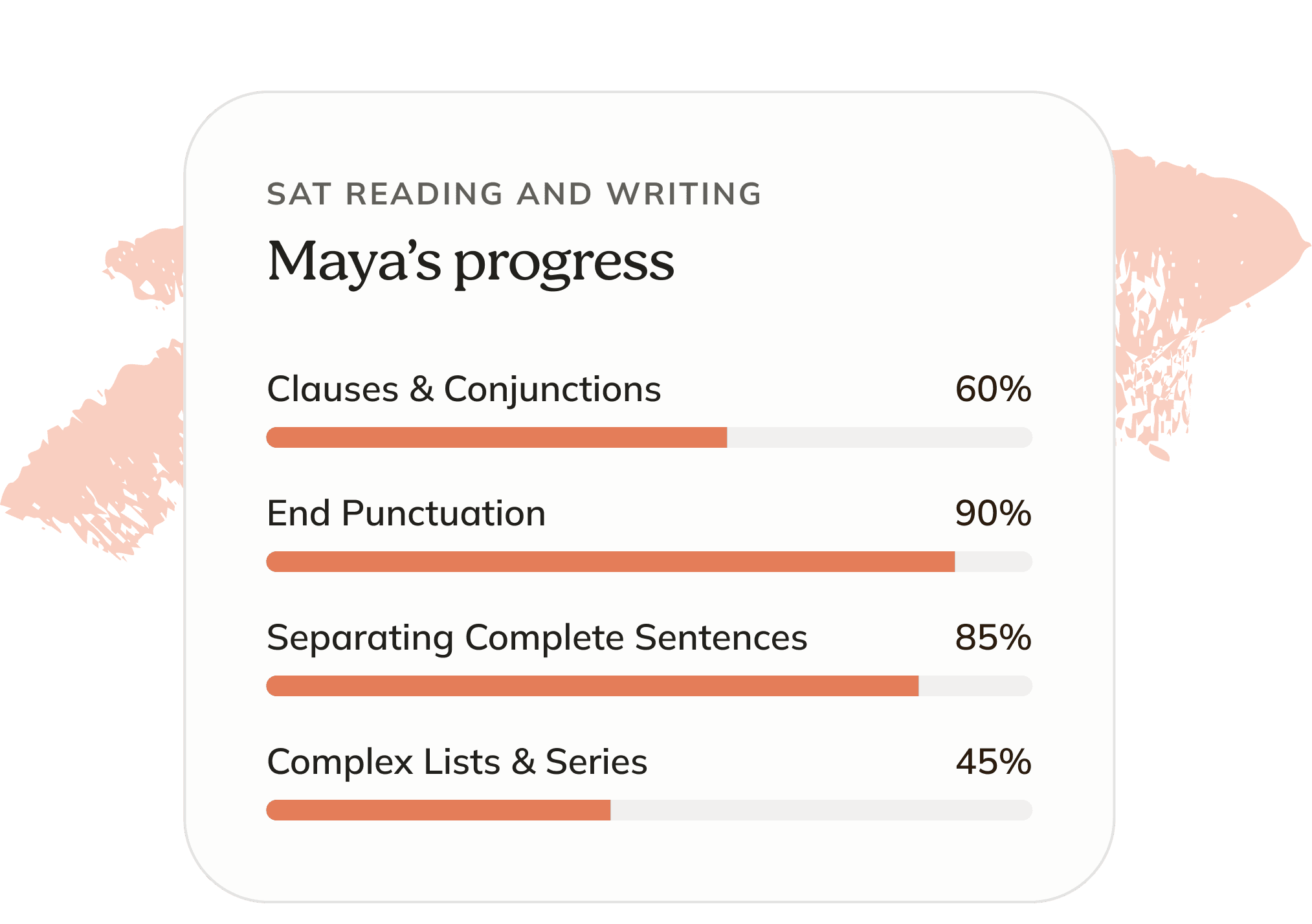
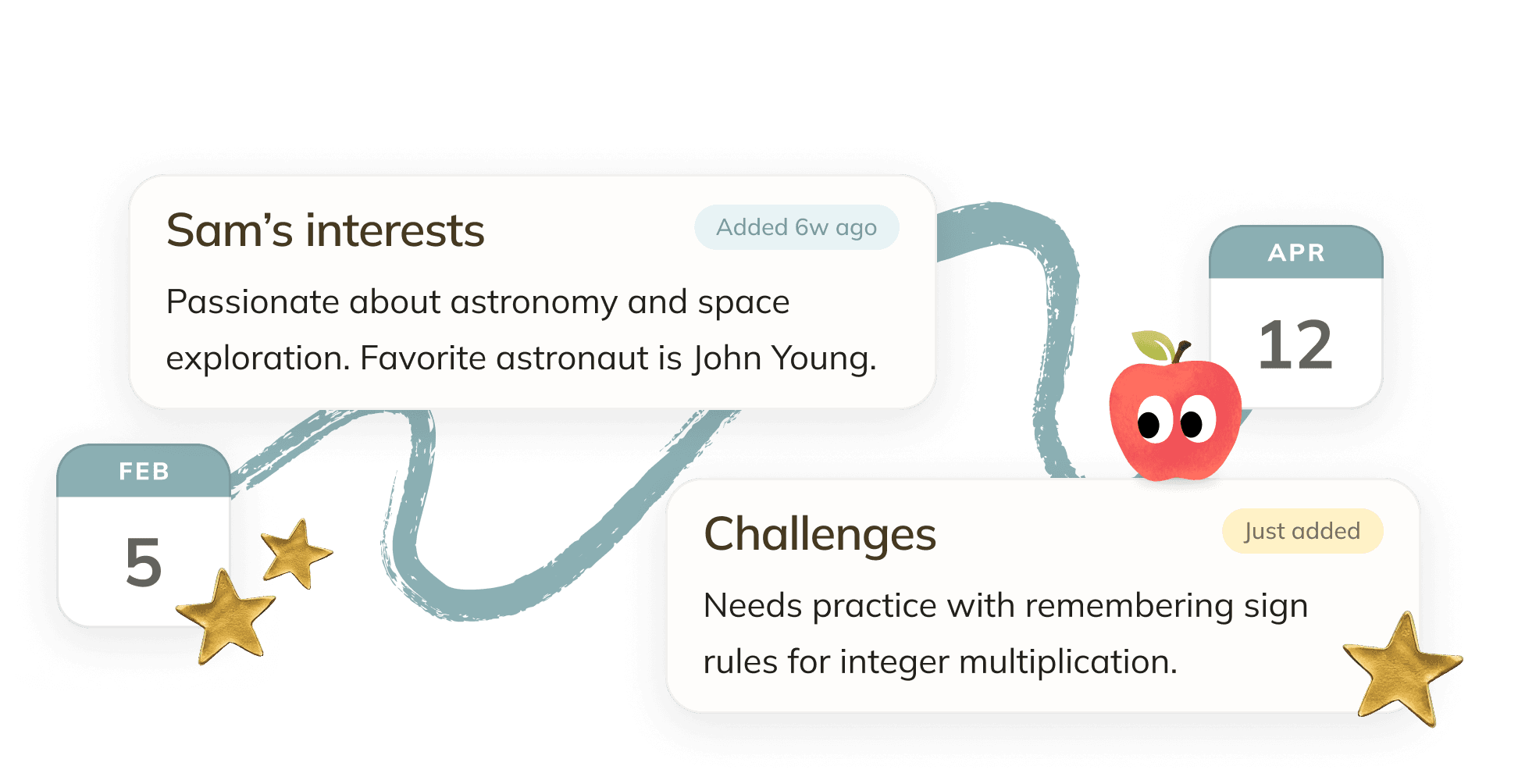
We break all subjects down into granular skills, then track mistakes and mastery on each one. Parents can see the whole picture at a glance.
Aristotle remembers every session: what you’ve covered, where you got stuck, how you like things explained. It picks up right where you left off.
The curriculum
Aristotle is designed to always know what to teach at exactly the right time.
Sample curriculum
* Click a topic to see the skills inside
Counting
Probability Axioms & Rules
Conditional Probability & Independence
Discrete Random Variables
Continuous Random Variables
Joint Distributions
Limit Theorems & Preview
Probability tutoring curriculum98 skills across 7 units
Counting
Combinatorial counting techniques that underlie the naive definition of probability: the multiplication rule, permutations and combinations, binomial coefficients, and the more specialized tools (sampling table, complement, stars and bars, inclusion-exclusion) needed for harder counting problems. Topics: Fundamental Counting Rules, Advanced Counting Techniques.
Probability Axioms & Rules
The formal foundations of probability: sample spaces and events, the naive definition, the Kolmogorov axioms and the properties they imply, odds, simulation as a way to estimate probabilities, and classic application problems (birthday, matching). Topics: Sample Spaces, Axioms, and Properties, Simulation and Classic Problems.
Conditional Probability & Independence
Conditioning on information: the definition and multiplication rule, the law of total probability and Bayes' rule for updating beliefs, the base-rate fallacy, independence (including pairwise vs. Topics: Conditional Probability and Bayes' Rule, Independence, Case Studies: Gambler's Ruin, Monty Hall, Simpson's Paradox.
Discrete Random Variables
Discrete random variables and their distributions: the RV concept, PMF and CDF, expectation and variance (including linearity, indicator RVs, and LOTUS), and the named discrete distributions (Bernoulli, binomial, hypergeometric, geometric, negative binomial, Poisson). Topics: Random Variables, PMF/CDF, Expectation, Variance, Named Discrete Distributions.
Continuous Random Variables
This unit extends random variables from discrete to continuous, replacing sums with integrals: densities and CDFs, expectation, variance, and LOTUS by integration, the uniform distribution and the change-of-variables technique it motivates, the memoryless exponential, and the normal distribution with its standardization trick, closing with a light look at the gamma distribution. Topics: Density Functions, Moments, and LOTUS, Uniform Distribution and Transformations, Exponential Distribution and Memorylessness, Normal Distribution and a Light Look at Gamma.
Joint Distributions
This unit handles more than one random variable at once: joint, marginal, and conditional distributions and the independence test built from them; covariance and correlation as measures of joint linear behavior feeding into the variance of a sum; conditional expectation and the tower and total-variance identities built on it; and a light look at the multinomial and bivariate normal as named joint distributions. Topics: Joint, Marginal, and Conditional Distributions, Sums, Covariance, and Variance of Sums, Conditional Expectation and the Tower Property.
Limit Theorems & Preview
This closing unit steps back from individual distributions to what happens in the limit: Markov's and Chebyshev's inequalities bound tails from just a mean or variance, the law of large numbers and Central Limit Theorem describe how sums and means behave as the sample size grows, moment generating functions package all of a distribution's moments into one tool, and a compact preview of the Poisson process and Markov chains previews where probability goes next. Topics: Inequalities and Limit Theorems, Moment Generating Functions, Stochastic Processes Preview.
My son told me yesterday that we should cancel his human tutor, because Aristotle is doing a better job. The human tutor was $250/hour.

A few things you might wonder before getting started.
Aristotle's Probability course tracks 98 skills across 7 units, including Counting, Probability Axioms & Rules, and Conditional Probability & Independence. Every skill is linked to the skills it builds on, so the tutor always knows which parts of Probability your child has mastered and what to teach next.
Check out our most recent blog posts.
This could be you
For homework, supporting your child, or anything you’ve always wanted to know more about, Aristotle makes it easy for anyone to learn out loud.