Every skill mapped
Differential Equations on Aristotle is 241 skills across 12 units, each linked to the skills it builds on.

Differential Equations
Pioneered by Stanford AI researchers and learning scientists, Aristotle is the world's first voice-based AI tutor. A full Differential Equations course, mapped skill by skill.
Trusted by families at









Fits your child's Differential Equations class
Differential Equations on Aristotle is 241 skills across 12 units, each linked to the skills it builds on.
Share a syllabus, textbook, or reading list and sessions follow it, or let Aristotle lead the way through the course.
Aristotle moves on when a skill is mastered and slows down when it isn't, so no time goes to what your child already knows.
Features
Talk things through, work side by side, and come back next time to a tutor who remembers where you left off.
Ask questions out loud, hear explanations in Aristotle’s voice, and interrupt whenever you need to.
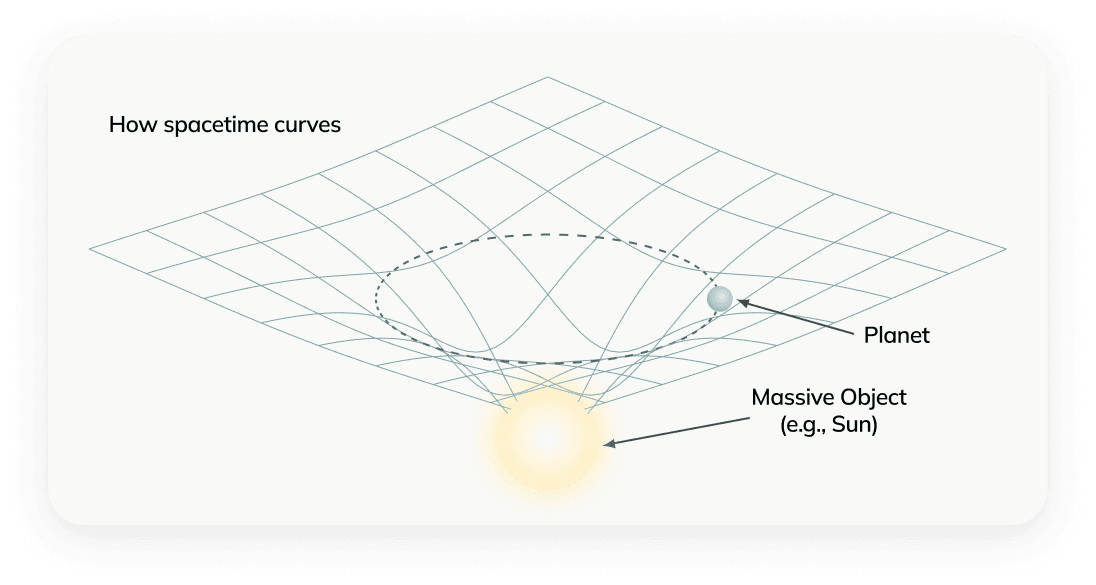
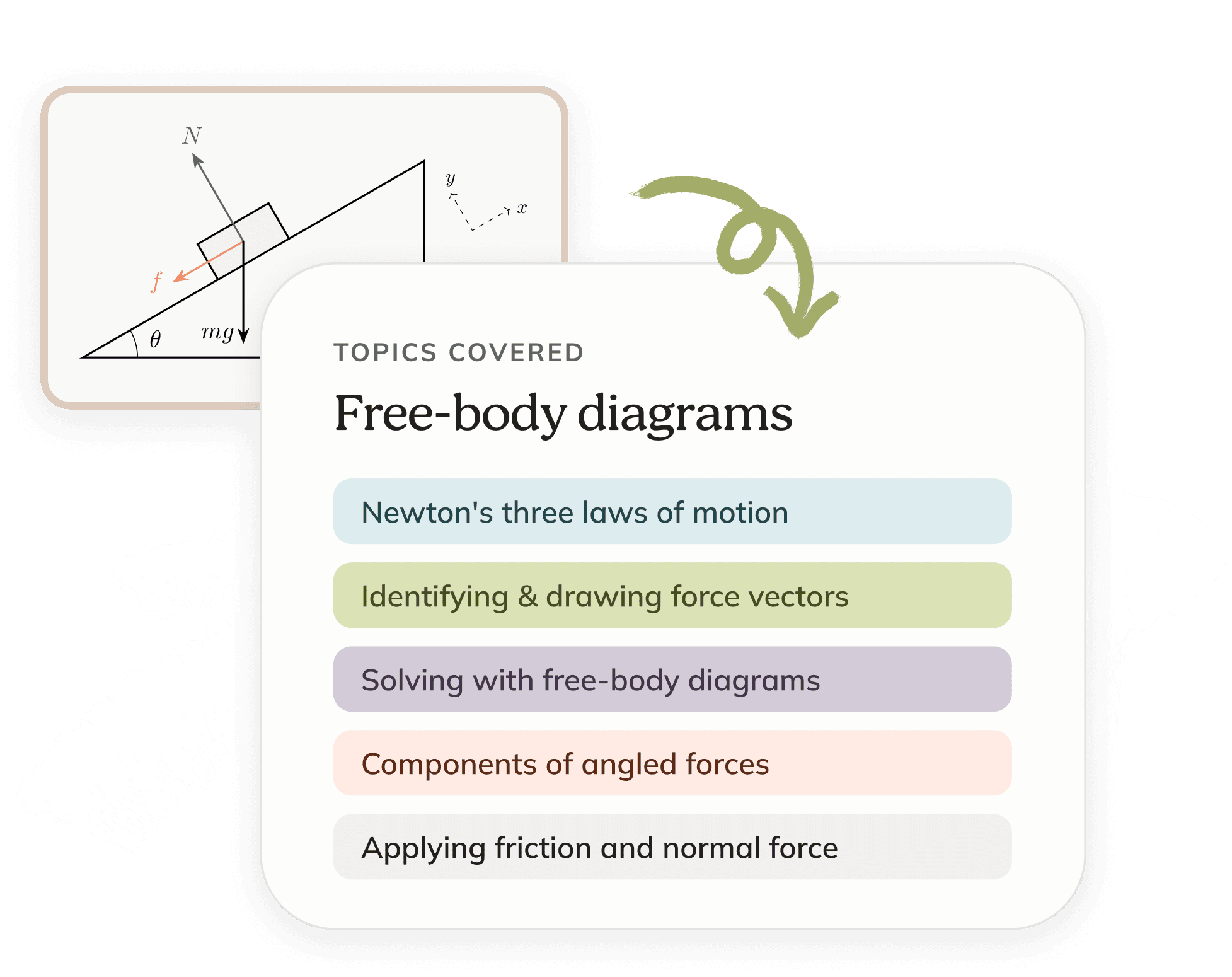
Aristotle draws steps, diagrams, and images to help you learn visually.
Get practice problems tailored to the exact topics you’re struggling with.
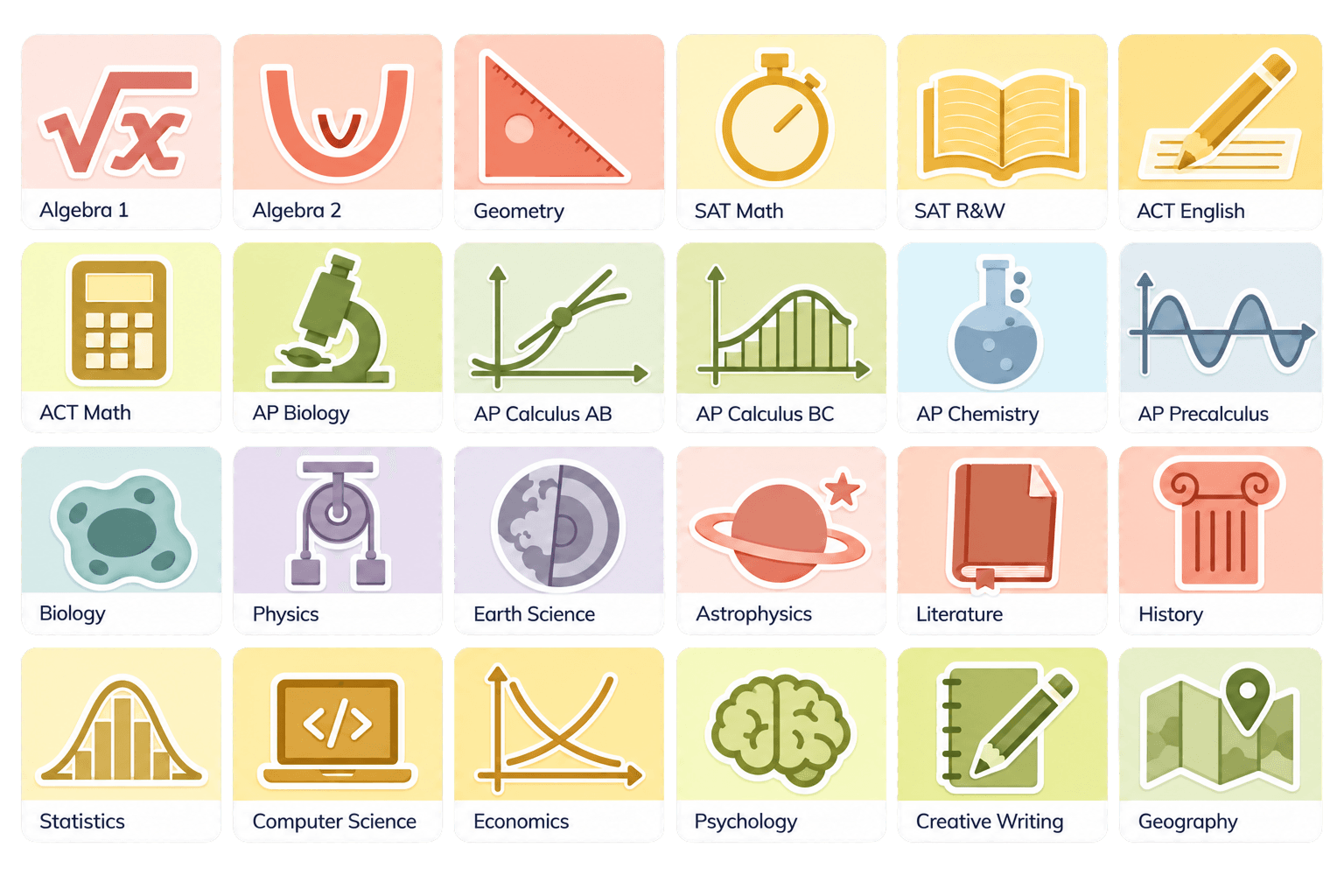
From middle-school math to AP exams to SAT/ACT prep. We also build custom plans matched to state standards and specific courses.
Revisit session summaries, session whiteboards, and uploads in one place.
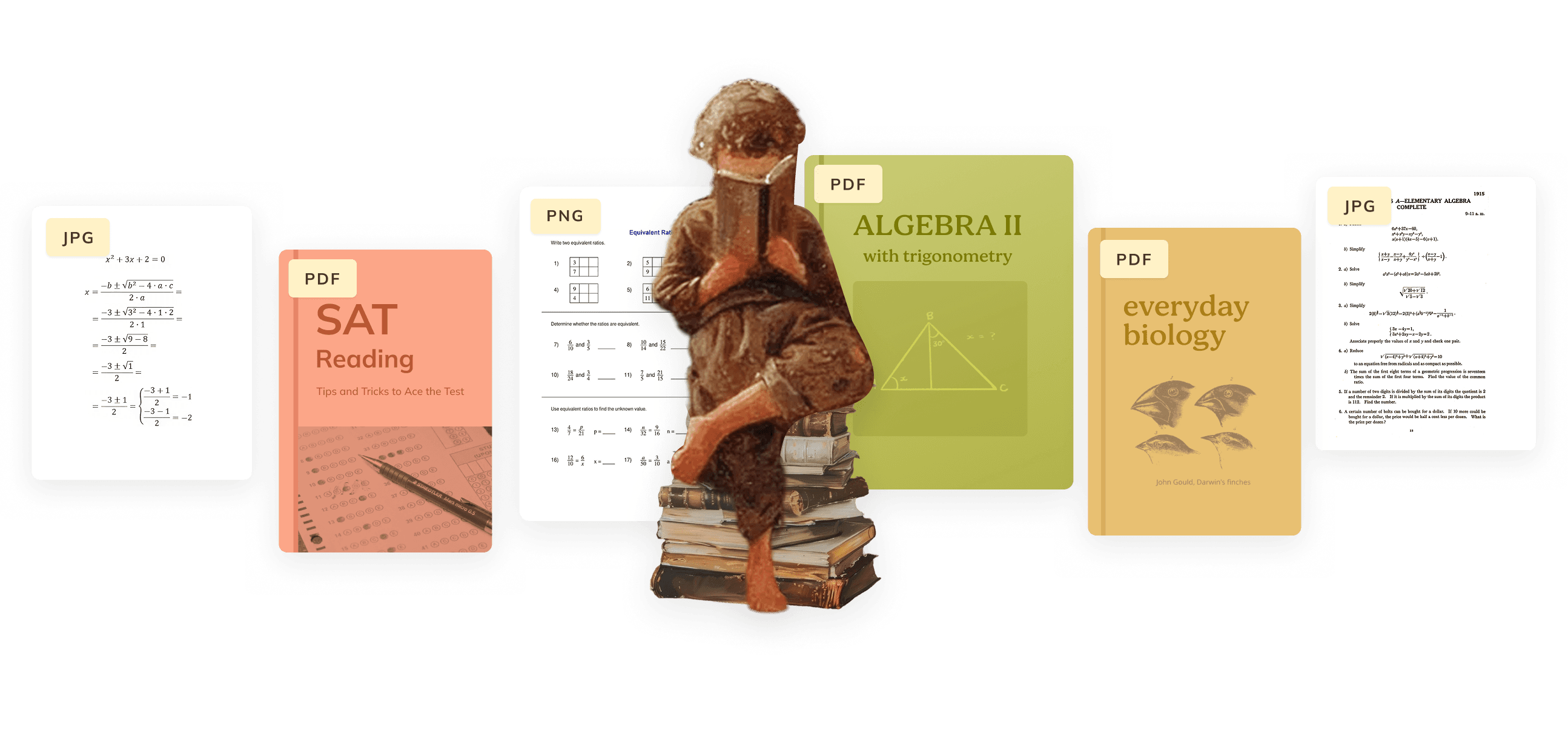
Aristotle can read and navigate any PDFs and images with the learner. That includes textbooks with hundreds of pages!
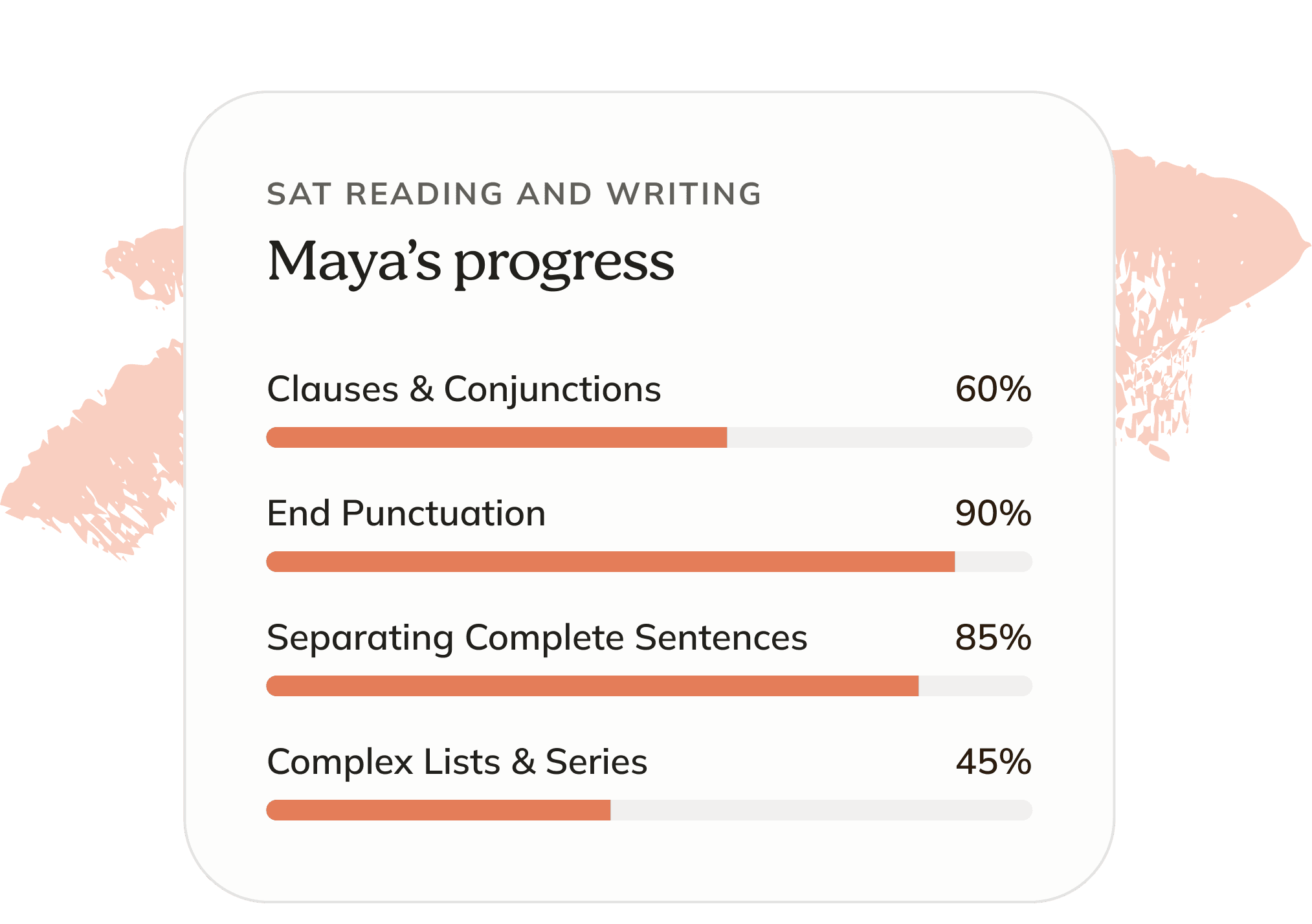
We break all subjects down into granular skills, then track mistakes and mastery on each one. Parents can see the whole picture at a glance.
Aristotle remembers every session: what you’ve covered, where you got stuck, how you like things explained. It picks up right where you left off.
The curriculum
Aristotle is designed to always know what to teach at exactly the right time.
Sample curriculum
* Click a topic to see the skills inside
Differential Equations and Their Solutions
First-Order Methods
First-Order Models
Numerical Methods
Linear Second-Order Equations
Nonhomogeneous Linear Equations
Oscillations and Circuits
The Laplace Transform
Linear Systems
Nonlinear Systems and Stability
Series Solutions
Fourier Series and Boundary Value Problems
Differential Equations tutoring curriculum241 skills across 12 units
Differential Equations and Their Solutions
A differential equation is an equation for an unknown function that involves its derivatives, and this unit builds the language the rest of the course speaks. Topics: Classifying Differential Equations, Solutions and Solution Families, Initial-Value Problems, Existence and Uniqueness, Direction Fields, Autonomous Equations and the Phase Line.
First-Order Methods
This unit is the toolbox for solving first-order equations exactly, and every method is tied to a form the student must learn to recognize. Topics: Separable Equations, First-Order Linear Equations, Exact Equations, Solutions by Substitution, Choosing a First-Order Method.
First-Order Models
Here the solving techniques meet real situations, and each family of word problems has its own schema. Topics: Building First-Order Models, Growth, Decay, and Continuous Interest, Newton's Law of Cooling, Mixing and Compartment Models, Nonlinear Population and Reaction Models, Motion Against Resistance, Series Circuits, Families of Curves and Orthogonal Trajectories.
Numerical Methods
Most differential equations that come out of real problems have no formula solution, so this unit builds the habit of producing numbers instead. Topics: Euler's Method, Improved Euler, Runge-Kutta, and Multistep Methods, Error, Step Size, and Stability, Numerical Solutions of Systems.
Linear Second-Order Equations
Second-order linear equations are the workhorse of the subject, and this unit builds both the theory that says what a solution set looks like and the techniques that produce one. Topics: Structure of Linear Second-Order Equations, Constant-Coefficient Homogeneous Equations, Reduction of Order, Cauchy-Euler Equations.
Nonhomogeneous Linear Equations
When a linear equation has a forcing term on the right side, its general solution is the complementary function plus any one particular solution, and this unit is about producing that particular solution. Topics: Undetermined Coefficients, The Annihilator Approach, Variation of Parameters, Green's Functions.
Oscillations and Circuits
The linear second-order machinery put to work on the two systems it was built for: a mass hanging on a spring and a series circuit containing a resistor, an inductor, and a capacitor. Topics: Free Undamped Motion, Free Damped Motion, Forced Motion: Transient and Steady State, Resonance and Frequency Response, Series Circuits and the Mechanical Analogy, Other Small-Oscillation Models.
The Laplace Transform
A method that converts an initial-value problem into an algebra problem. Topics: The Transform and Its Existence, Inverse Transforms, the s-Shift, and Poles, Solving Initial-Value Problems by Transform, Step Functions and Piecewise Forcing, Impulse Forcing, Further Operational Properties, Convolution, Transfer Functions, and Impulse Response, Systems by the Laplace Transform.
Linear Systems
Several unknown functions of the same variable, coupled together and written as one matrix equation X' = AX + F. Topics: Systems in Matrix Form, Solving Systems by Elimination, Distinct Real Eigenvalues, Complex Eigenvalues, Repeated Eigenvalues, Phase Portraits and Stability, Nonhomogeneous Systems, Fundamental Matrices and the Matrix Exponential, Systems from Applications.
Nonlinear Systems and Stability
Almost no nonlinear system of differential equations can be solved with a formula, so this unit answers a different question: what do the solutions do? The plane is organized around the critical points, the places where both rates are zero and the system sits still. Topics: Critical Points and Exact Trajectories, Linearization and Almost-Linear Stability, Interacting Populations, The Nonlinear Pendulum and Conservative Systems, Periodic Solutions and Long-Term Behavior.
Series Solutions
When the coefficients of a linear second-order equation are not constants, the characteristic-equation machinery fails and there is usually no elementary formula for the solution. Topics: Power Series Tools, Series Solutions at an Ordinary Point, Regular Singular Points and Frobenius Series, Bessel and Legendre Equations.
Fourier Series and Boundary Value Problems
Everything so far has fixed the arbitrary constants with conditions at a single point. Topics: Eigenvalue Problems, Boundary-Value Models and Numerical Solution, Fourier Series, The Heat Equation, The Wave Equation, Laplace's Equation, Sturm-Liouville Problems and Eigenfunction Expansions.
My son told me yesterday that we should cancel his human tutor, because Aristotle is doing a better job. The human tutor was $250/hour.

A few things you might wonder before getting started.
Aristotle's Differential Equations course tracks 241 skills across 12 units, including Differential Equations and Their Solutions, First-Order Methods, and First-Order Models. Every skill is linked to the skills it builds on, so the tutor always knows which parts of Differential Equations your child has mastered and what to teach next.
Check out our most recent blog posts.
This could be you
For homework, supporting your child, or anything you’ve always wanted to know more about, Aristotle makes it easy for anyone to learn out loud.