Every skill mapped
Creative Writing on Aristotle is 58 skills across 9 units, each linked to the skills it builds on.
Creative Writing
Pioneered by Stanford AI researchers and learning scientists, Aristotle is the world's first voice-based AI tutor. A full Creative Writing course, mapped skill by skill.
Trusted by families at









Features
Talk things through, work side by side, and come back next time to a tutor who remembers where you left off.
Ask questions out loud, hear explanations in Aristotle’s voice, and interrupt whenever you need to.
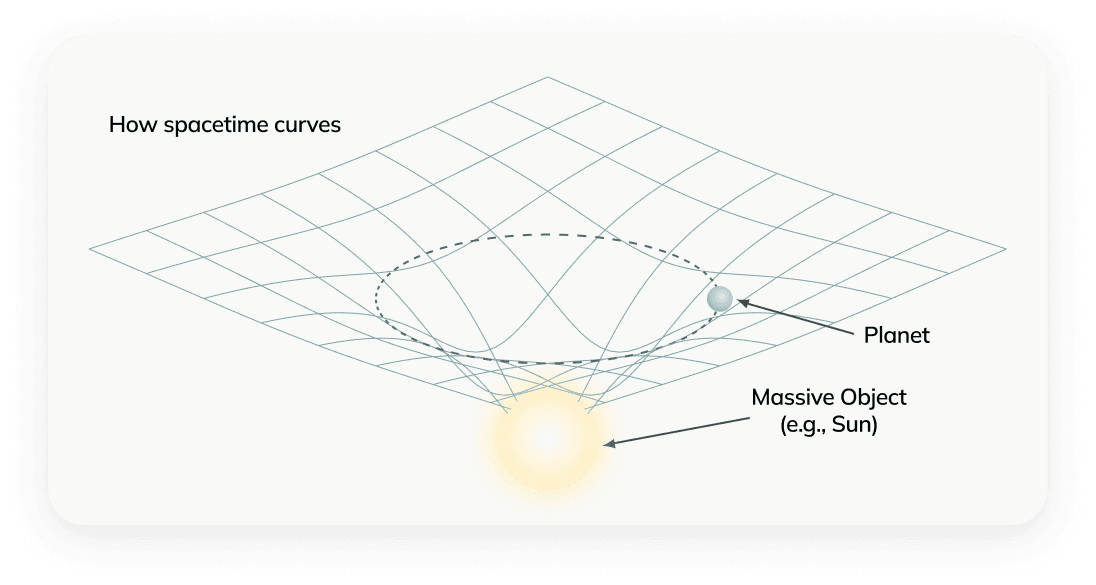
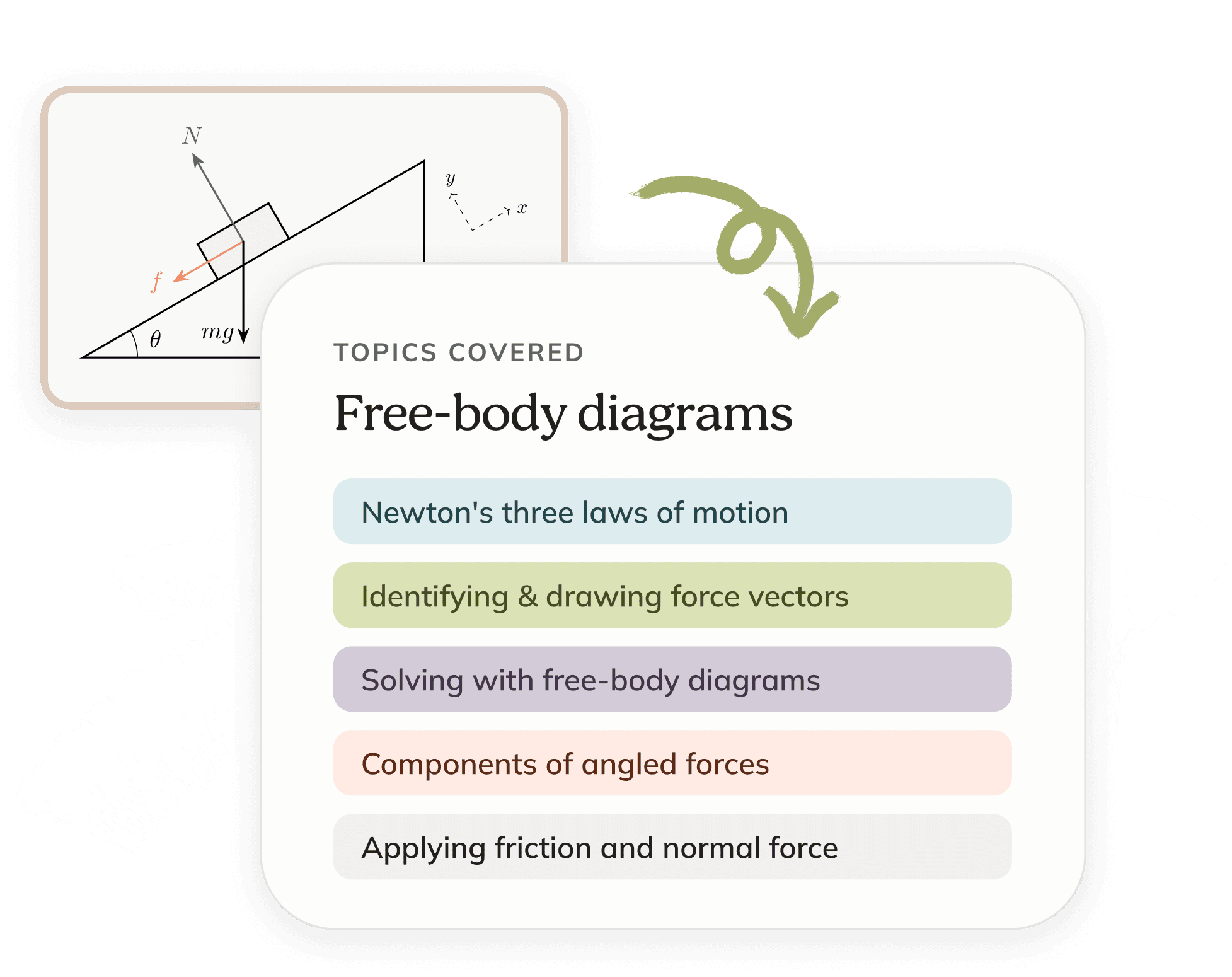
Aristotle draws steps, diagrams, and images to help you learn visually.
Get practice problems tailored to the exact topics you’re struggling with.
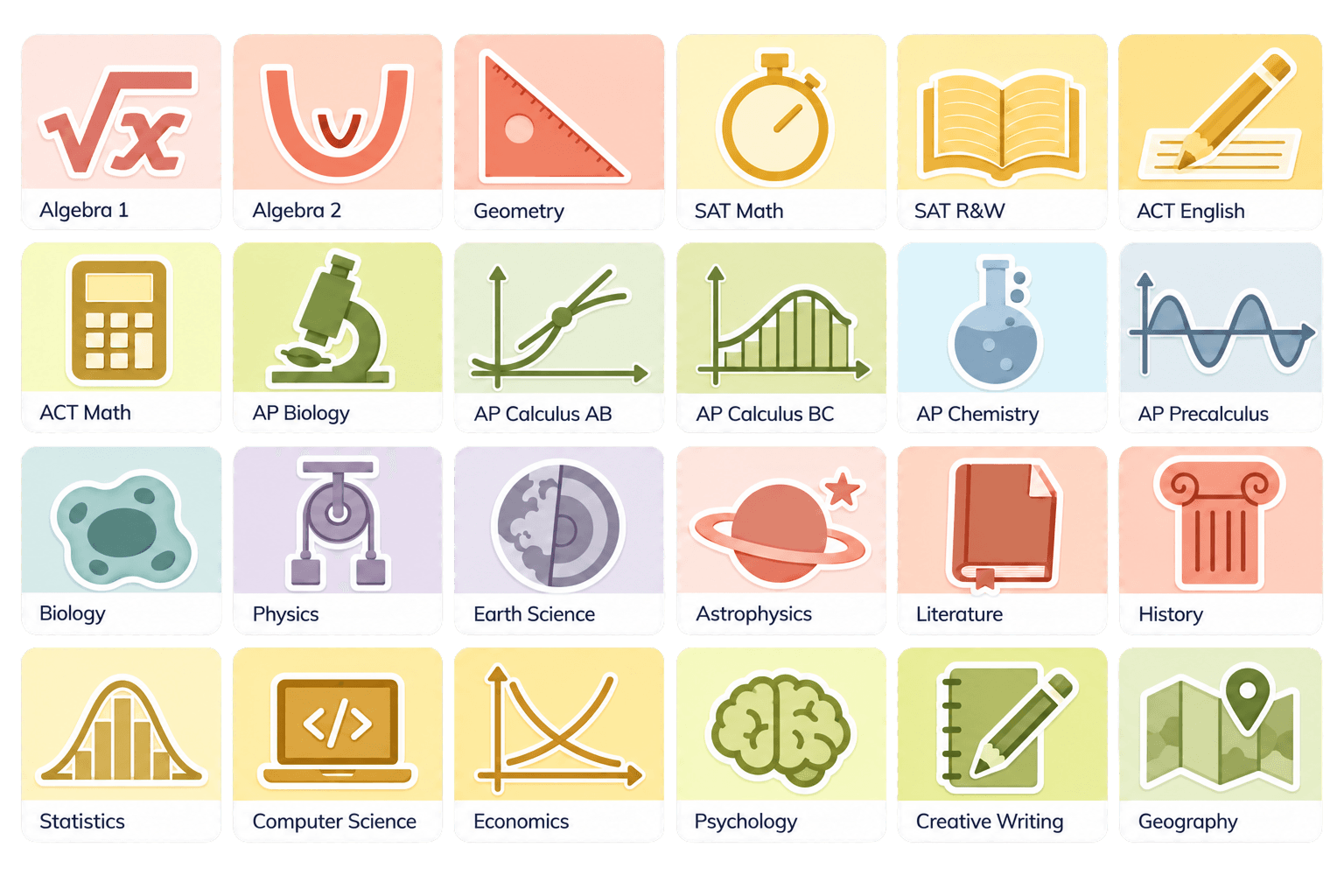
From middle-school math to AP exams to SAT/ACT prep. We also build custom plans matched to state standards and specific courses.
Revisit session summaries, session whiteboards, and uploads in one place.
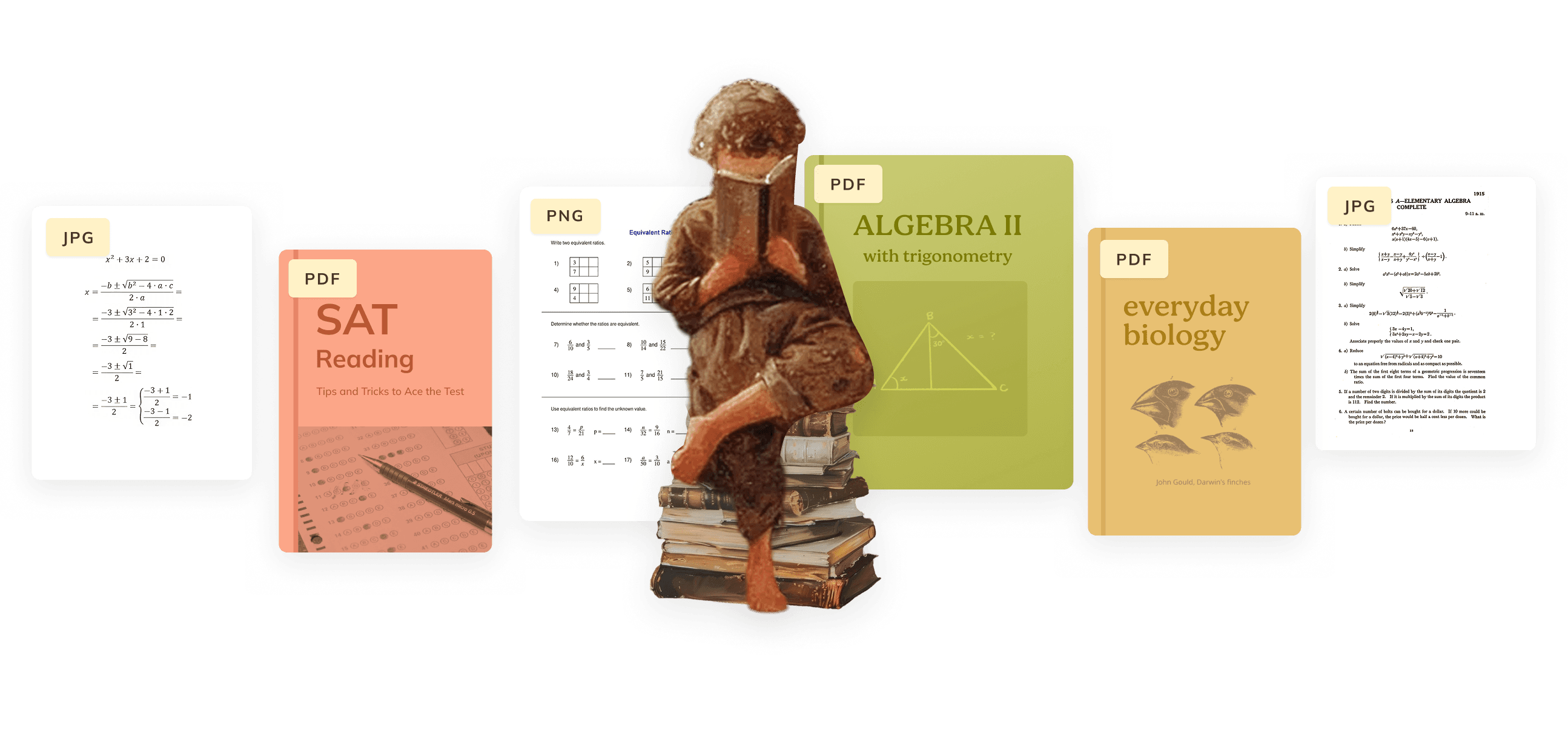
Aristotle can read and navigate any PDFs and images with the learner. That includes textbooks with hundreds of pages!
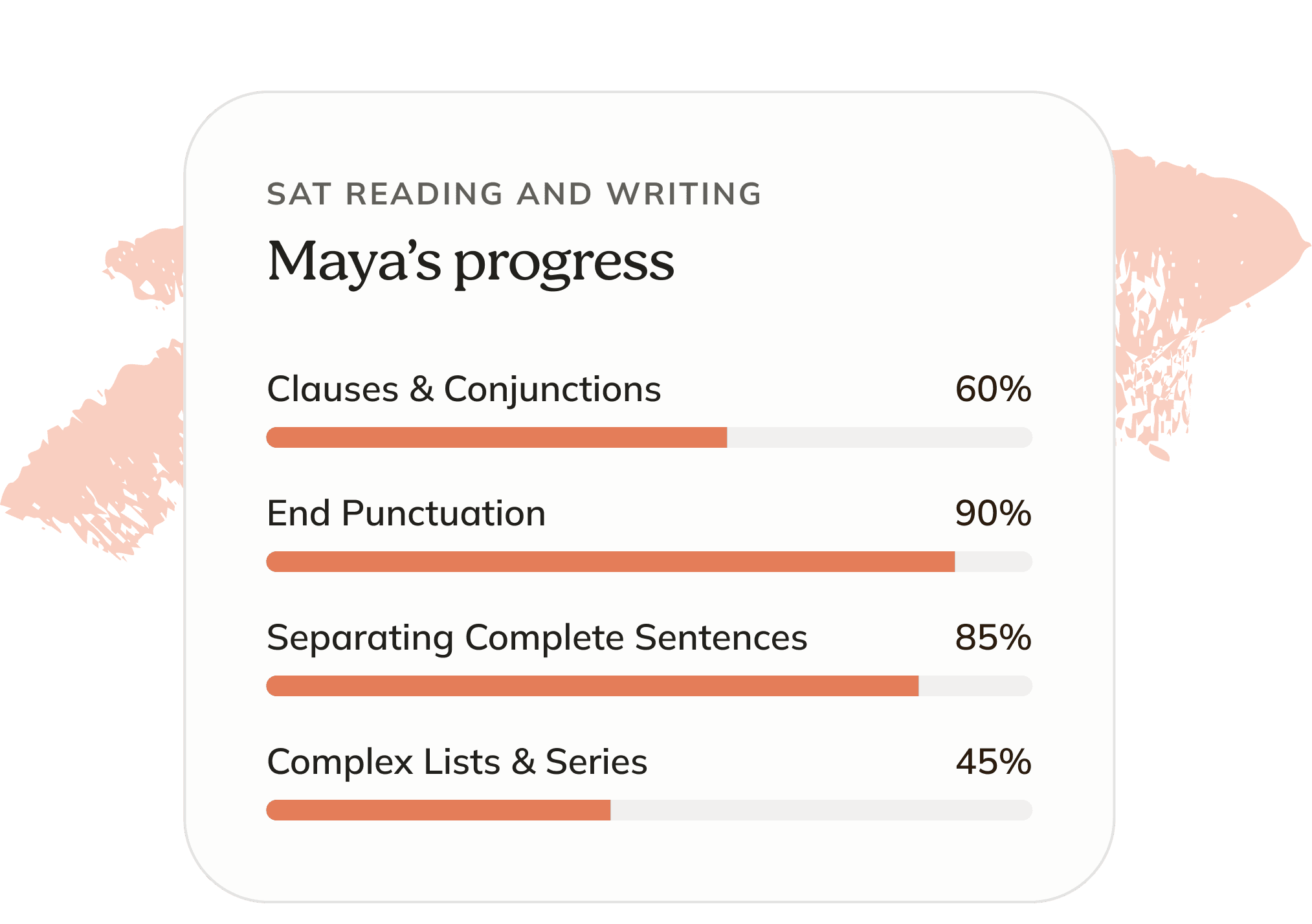
We break all subjects down into granular skills, then track mistakes and mastery on each one. Parents can see the whole picture at a glance.
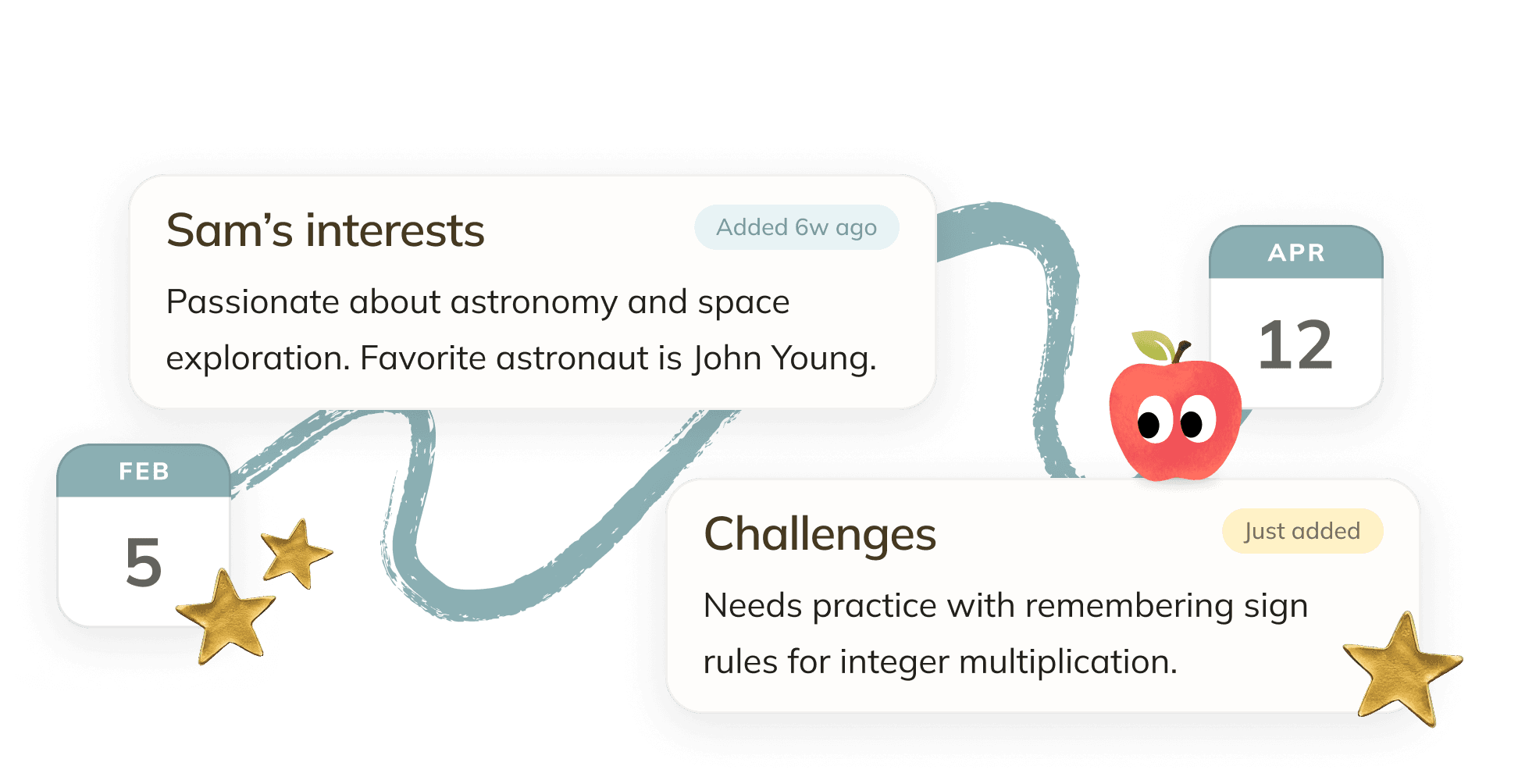
Aristotle remembers every session: what you’ve covered, where you got stuck, how you like things explained. It picks up right where you left off.
The curriculum
Aristotle is designed to always know what to teach at exactly the right time.
Sample curriculum
* Click a topic to see the skills inside
Finding Something to Write
Writing a Scene That Moves
People Who Want Different Things
Choosing Who Tells the Story
From Premise to Finished Story
Place, Genre, and Imagined Worlds
Writing Poems
Personal Essays and Dramatic Scenes
Finishing, Workshopping, and Revising
Creative Writing tutoring curriculum58 skills across 9 units
Finding Something to Write
Build a store of observations, questions, and possibilities that can become a small finished piece. Topics: The Writer’s Notebook, Reading Like a Writer.
Writing a Scene That Moves
Give readers something to picture and a reason to keep reading. Topics: Action, Detail, and Change, Scene, Summary, and Pacing.
People Who Want Different Things
Build characters whose choices and relationships create the story. Topics: Desire, Contradiction, and Choice, Dialogue and Subtext.
Choosing Who Tells the Story
Control the information, distance, and language through which readers experience events. Topics: Point of View and Distance, Sentences, Images, and Tone.
From Premise to Finished Story
Shape a short story or a longer project around choices and consequences. Topics: Openings, Development, and Endings, Flash Fiction and Longer Projects.
Place, Genre, and Imagined Worlds
Give a setting consequences and use genre expectations deliberately. Topics: Setting That Affects the Story, Mystery, Speculation, and Suspense.
Writing Poems
Use concentrated language, sound, and shape to discover a poem’s movement. Topics: Images, Speakers, and Sound, Lines, Turns, and Revision.
Personal Essays and Dramatic Scenes
Try forms whose relationships to truth, reflection, and performance differ from fiction. Topics: Memoir and the Personal Essay, Writing for Performance.
Finishing, Workshopping, and Revising
Learn to see what a draft actually does and choose the revision that matters most. Topics: Receiving and Giving Useful Feedback, Revision and a Small Portfolio.
My son told me yesterday that we should cancel his human tutor, because Aristotle is doing a better job. The human tutor was $250/hour.

A few things you might wonder before getting started.
Aristotle's Creative Writing course tracks 58 skills across 9 units, including Finding Something to Write, Writing a Scene That Moves, and People Who Want Different Things. Every skill is linked to the skills it builds on, so the tutor always knows which parts of Creative Writing your child has mastered and what to teach next.
Check out our most recent blog posts.
This could be you
For homework, supporting your child, or anything you’ve always wanted to know more about, Aristotle makes it easy for anyone to learn out loud.