College Board framework
Every AP World History skill maps to a unit and topic in the College Board's course and exam description, so sessions match what the exam tests.
AP World History
Pioneered by Stanford AI researchers and learning scientists, Aristotle is the world's first voice-based AI tutor. Built for the AP World History course and exam.
Trusted by families at








AP exam prep
Aristotle tracks 124 AP World History skills, finds the ones costing your child points, and plans review back from the May exam.
Follows the College Board's units.
Your child talks it through. Aristotle coaches from the step that went wrong.
Any time before the exam. No booking.
See what's mastered and what's left.
Features
Talk things through, work side by side, and come back next time to a tutor who remembers where you left off.
Ask questions out loud, hear explanations in Aristotle’s voice, and interrupt whenever you need to.
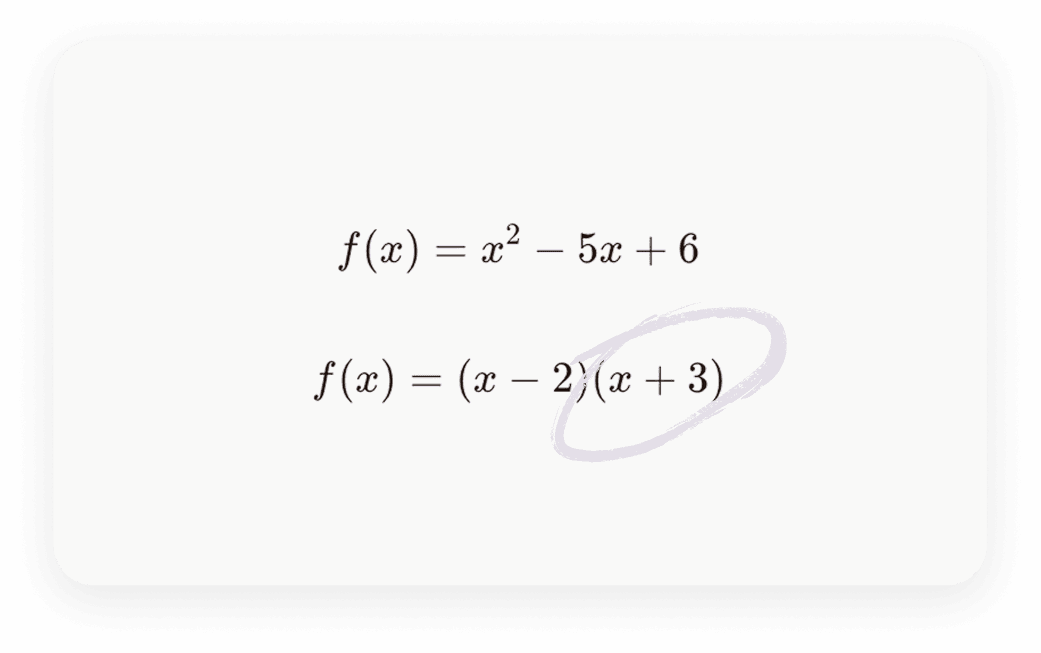
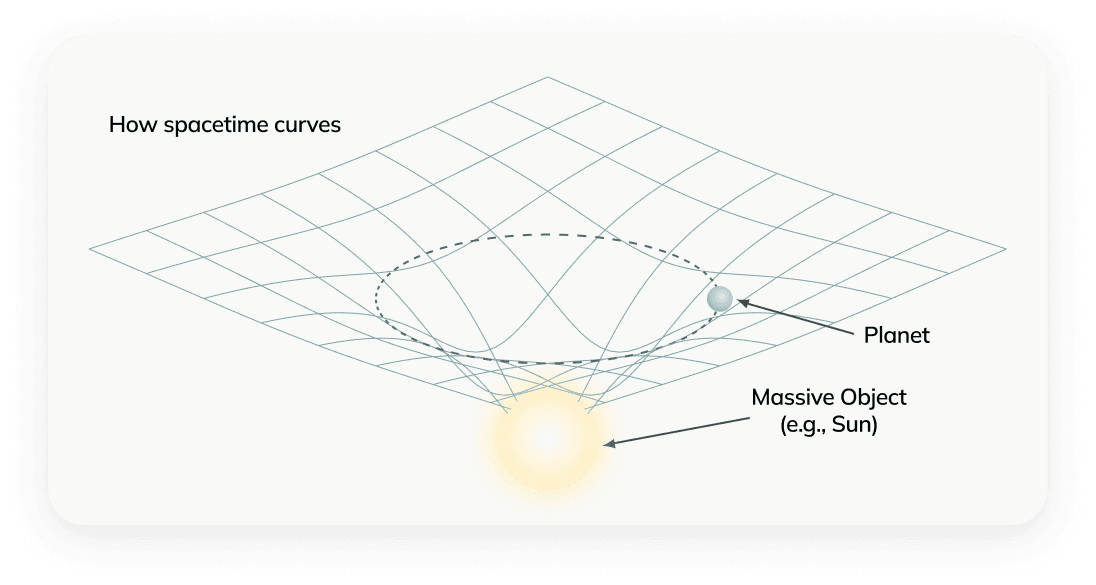
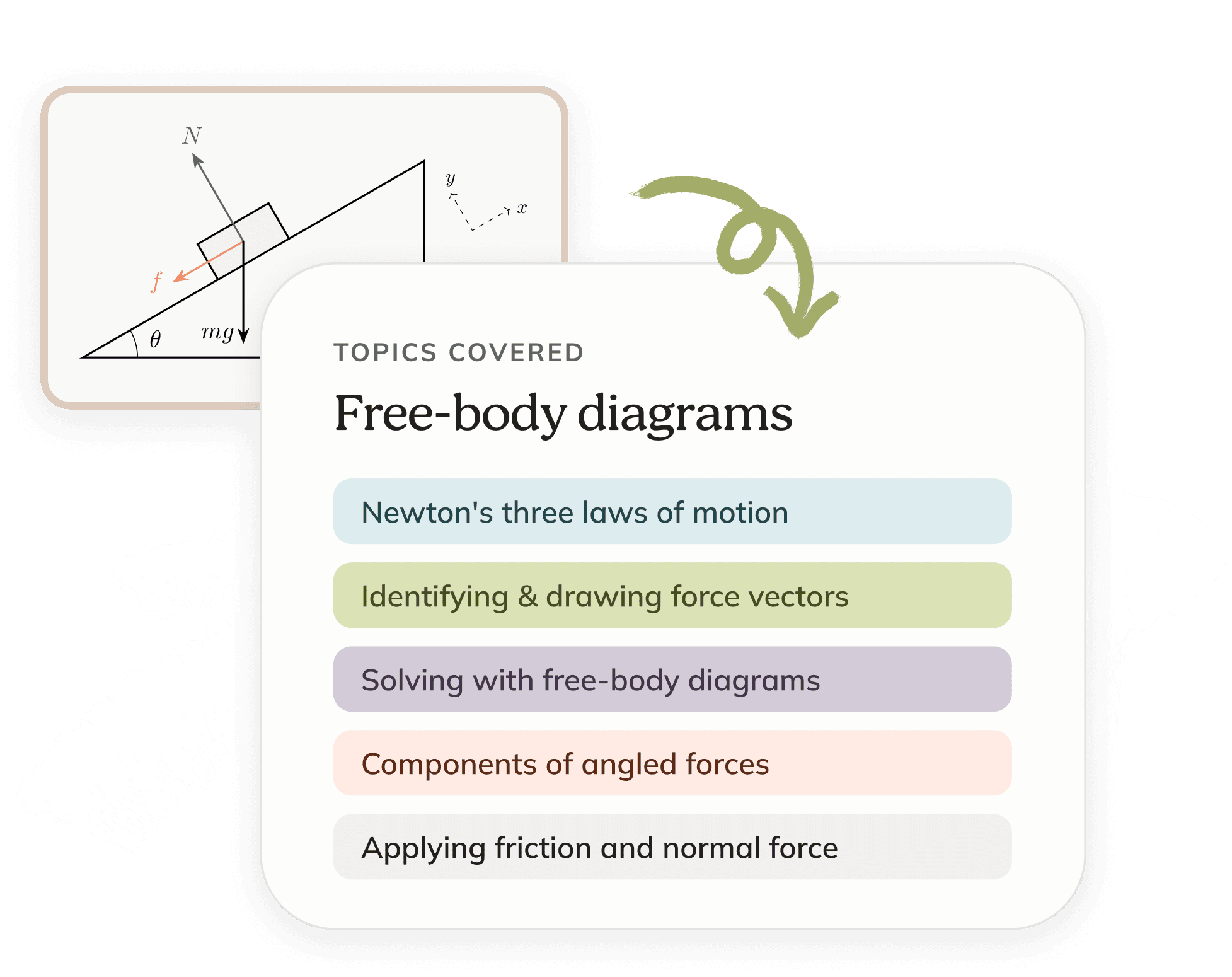
Aristotle draws steps, diagrams, and images to help you learn visually.
Get practice problems tailored to the exact topics you’re struggling with.
From middle-school math to AP exams to SAT/ACT prep. We also build custom plans matched to state standards and specific courses.
Revisit session summaries, session whiteboards, and uploads in one place.
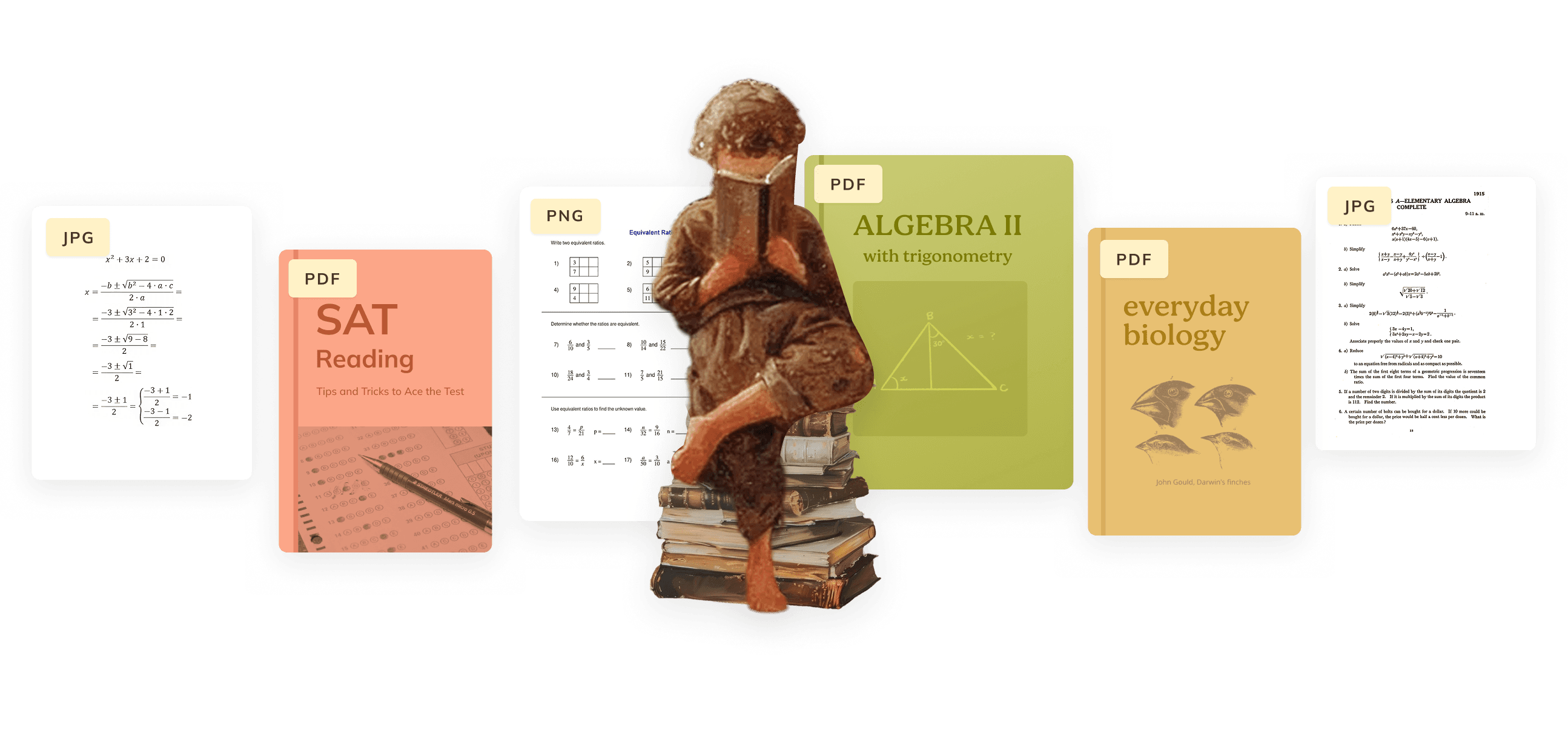
Aristotle can read and navigate any PDFs and images with the learner. That includes textbooks with hundreds of pages!
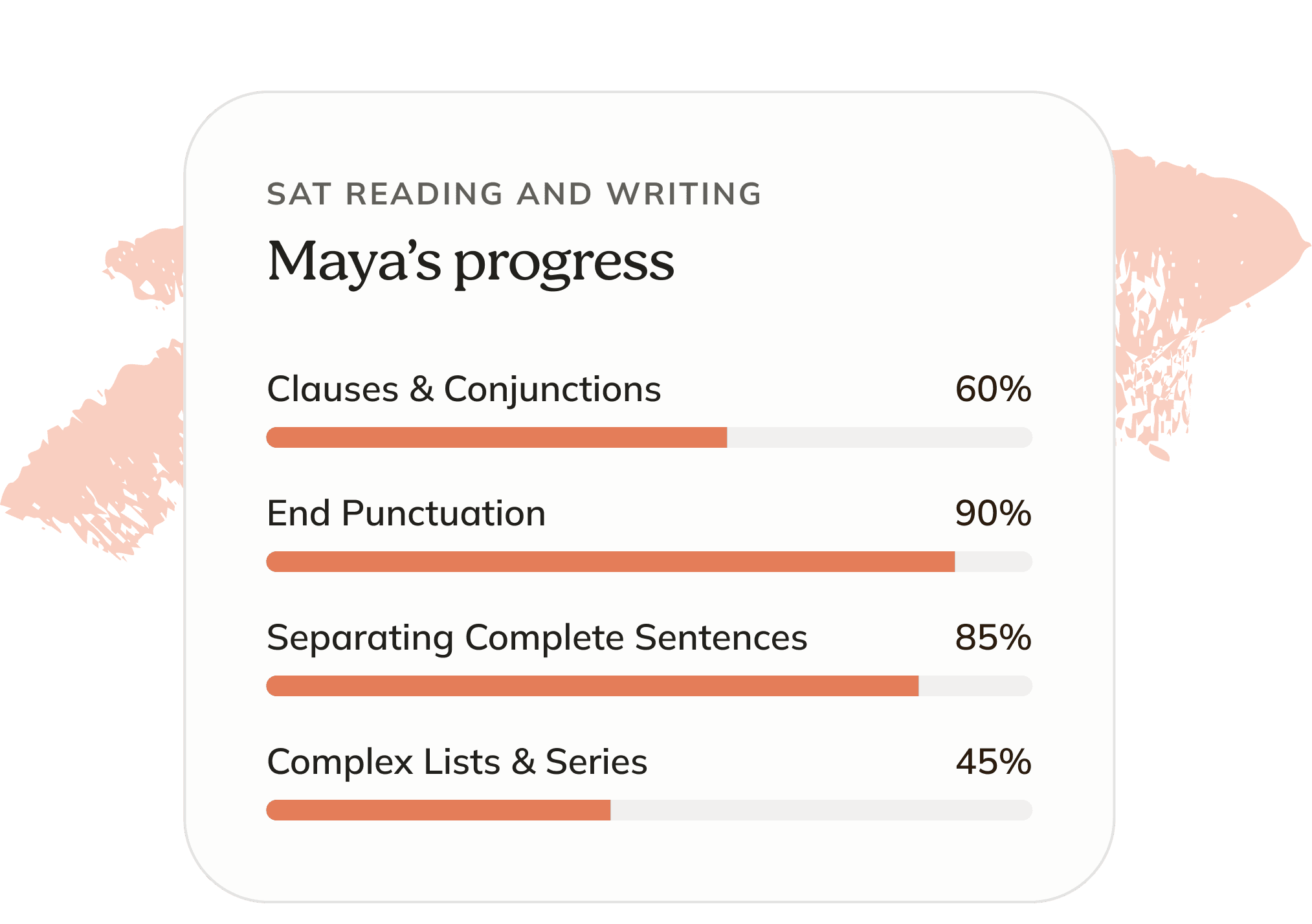
We break all subjects down into granular skills, then track mistakes and mastery on each one. Parents can see the whole picture at a glance.
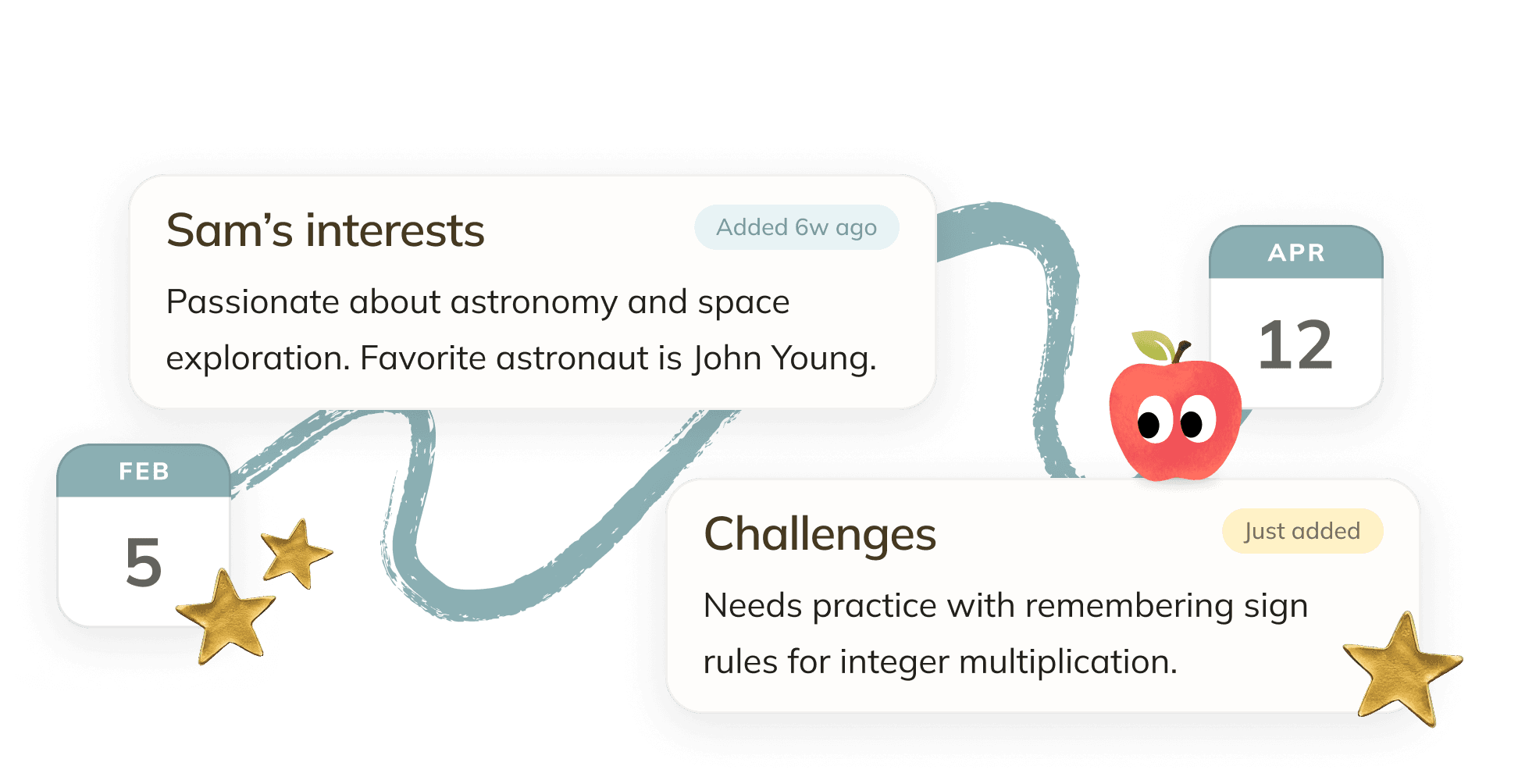
Aristotle remembers every session: what you’ve covered, where you got stuck, how you like things explained. It picks up right where you left off.
The curriculum
Aristotle is designed to always know what to teach at exactly the right time.
Sample curriculum
* Click a topic to see the skills inside
The Global Tapestry, 1200 to 1450
Networks of Exchange, 1200 to 1450
Land-Based Empires, 1450 to 1750
Transoceanic Interconnections, 1450 to 1750
Revolutions, 1750 to 1900
Imperialism and Global Migration, 1750 to 1900
Global Conflict, 1900 to 1945
Cold War and Decolonization, 1945 to 1991
Globalization, 1900 to the Present
Historical Thinking and Writing
AP World History tutoring curriculum124 skills across 10 units
The Global Tapestry, 1200 to 1450
A region-by-region survey of how states held power and how belief systems shaped daily life between about 1200 and 1450: Song China and its cultural reach into Korea, Japan, and Vietnam; the Turkic-led successor states of the Abbasid world and the intellectual life of Dar al-Islam; the Hindu and Buddhist states of South and Southeast Asia; the Mexica, Inca, Maya, and North American societies; Great Zimbabwe, Ethiopia, and the Hausa kingdoms; and a fragmented, agricultural Europe. Topics: Song China and East Asia, Dar al-Islam, South and Southeast Asia, States in the Americas, States in Africa, Europe, 1200 to 1450, Comparing State Formation, 1200 to 1450.
Networks of Exchange, 1200 to 1450
How goods, people, ideas, crops, and diseases moved across Afro-Eurasia between about 1200 and 1450, and what that movement did to the societies it touched. Topics: The Silk Roads, The Mongol Empire, The Indian Ocean Network, Trans-Saharan Trade and Mali, Consequences of Connection, Comparing the Networks.
Land-Based Empires, 1450 to 1750
How the great land empires of the early modern period, the Ottomans, Safavids, Mughals, and Manchu Qing, along with Songhai and the European monarchies, expanded with gunpowder weapons, fought one another over territory and religion, and held their conquests together. Topics: Empires Expand, Administering Empires, Belief Systems in the Age of Empires, Comparing Land-Based Empires.
Transoceanic Interconnections, 1450 to 1750
How the oceans became highways between 1450 and 1750 and what that did to every connected society. Topics: Maritime Technology and Exploration, The Columbian Exchange, Maritime Empires Established, Silver, Mercantilism, and the Atlantic System, Belief, Resistance, and Social Hierarchy, Continuity and Change, 1450 to 1750.
Revolutions, 1750 to 1900
Two revolutions that ran together between 1750 and 1900. Topics: The Enlightenment, Nationalism, The Atlantic Revolutions, The Industrial Revolution, States and the Industrial Economy, Reactions to the Industrial Economy, Society in the Industrial Age, Continuity and Change in the Industrial Age.
Imperialism and Global Migration, 1750 to 1900
What industrialization did to the rest of the world between 1750 and 1900. Topics: Rationales and Expansion, Indigenous Responses to Expansion, The Imperial Global Economy, Migration in an Industrial World, Weighing the Effects of Imperialism.
Global Conflict, 1900 to 1945
How the world order dominated by Western empires in 1900 came apart in two world wars. Topics: Shifting Power After 1900, The First World War, The Interwar Years, The Second World War, Mass Atrocities After 1900, Weighing the Causes of Global Conflict.
Cold War and Decolonization, 1945 to 1991
Two processes that ran side by side after the Second World War. Topics: The Cold War, The Spread of Communism, Decolonization and New States, Responses to Power and Conflict, The End of the Cold War, Comparing the Cold War's Effects.
Globalization, 1900 to the Present
How science, technology, and markets tied the world together after 1900 and how people pushed back. Topics: Technology, Medicine, and the Environment, The Global Economy Since 1945, Rights, Reform, and Protest, Global Culture and Its Critics, International Institutions, Continuity and Change in a Globalized World.
Historical Thinking and Writing
The skills that run through every unit of the course and that the course rewards most: reading a source for its purpose, audience, point of view, and historical situation and comparing what two sources argue; placing a development in its wider context; explaining causes and effects, continuity and change, and similarities and differences across regions with real evidence; and building an argument, from a defensible thesis to well-chosen, well-explained evidence, in the forms the course uses, the short-answer response to a historian's claim, the document-based essay, and the long essay. Topics: Analyzing Sources, Historical Reasoning, Building an Argument, Writing Tasks.
My son told me yesterday that we should cancel his human tutor, because Aristotle is doing a better job. The human tutor was $250/hour.

A few things you might wonder before getting started.
Aristotle's AP World History course tracks 124 skills across 10 units, mapped to the College Board framework, including The Global Tapestry, 1200 to 1450, Networks of Exchange, 1200 to 1450, and Land-Based Empires, 1450 to 1750. Every skill is linked to the skills it builds on, so the tutor always knows which parts of AP World History your child has mastered and what to teach next.
Check out our most recent blog posts.
This could be you
For homework, supporting your child, or anything you’ve always wanted to know more about, Aristotle makes it easy for anyone to learn out loud.