College Board framework
Every AP US History skill maps to a unit and topic in the College Board's course and exam description, so sessions match what the exam tests.

AP US History
Pioneered by Stanford AI researchers and learning scientists, Aristotle is the world's first voice-based AI tutor. Built for the AP US History course and exam.
Trusted by families at









AP exam prep
Aristotle tracks 130 AP US History skills, finds the ones costing your child points, and plans review back from the May exam.
Follows the College Board's units.
Your child talks it through. Aristotle coaches from the step that went wrong.
Any time before the exam. No booking.
See what's mastered and what's left.
Features
Talk things through, work side by side, and come back next time to a tutor who remembers where you left off.
Ask questions out loud, hear explanations in Aristotle’s voice, and interrupt whenever you need to.
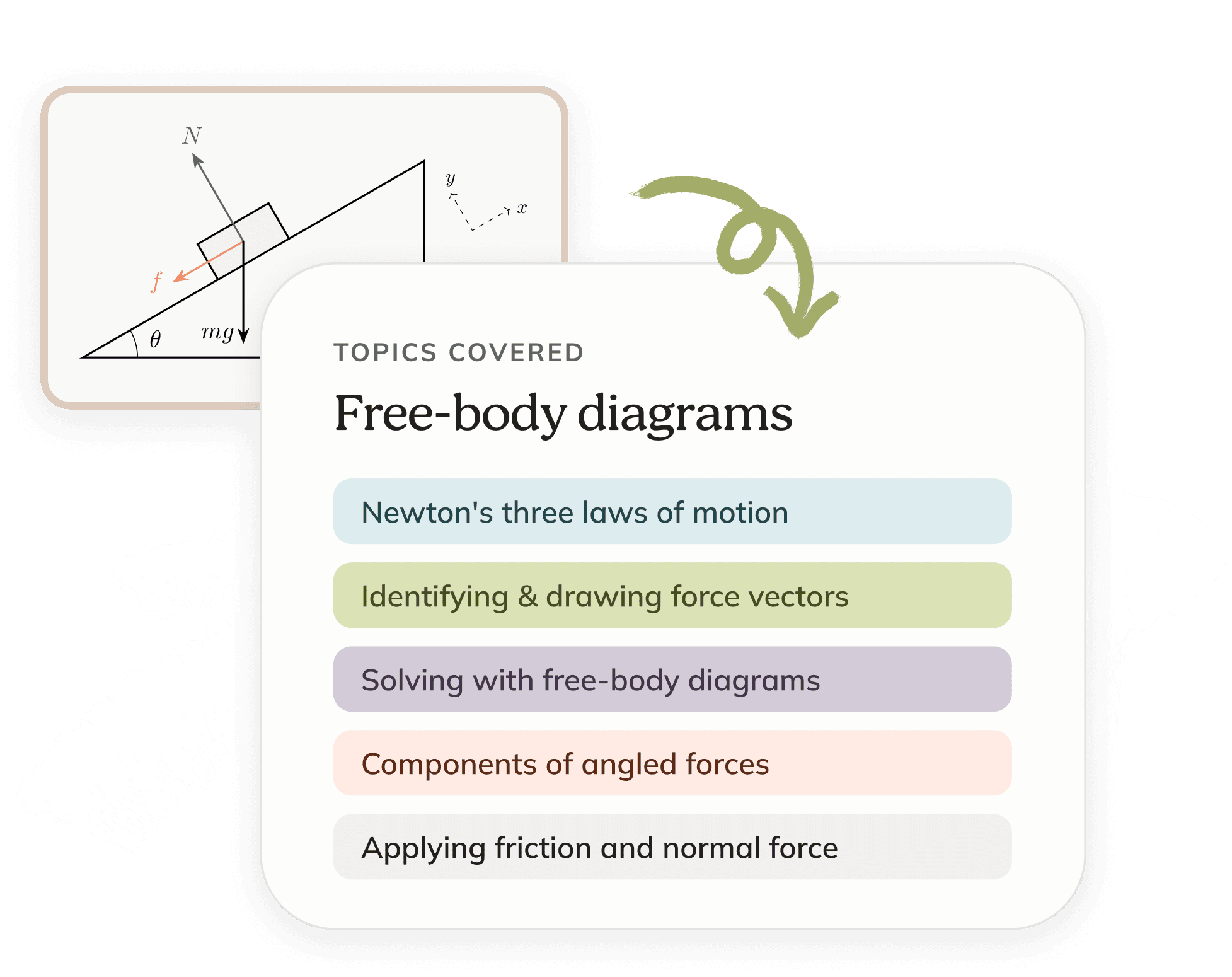
Aristotle draws steps, diagrams, and images to help you learn visually.
Get practice problems tailored to the exact topics you’re struggling with.
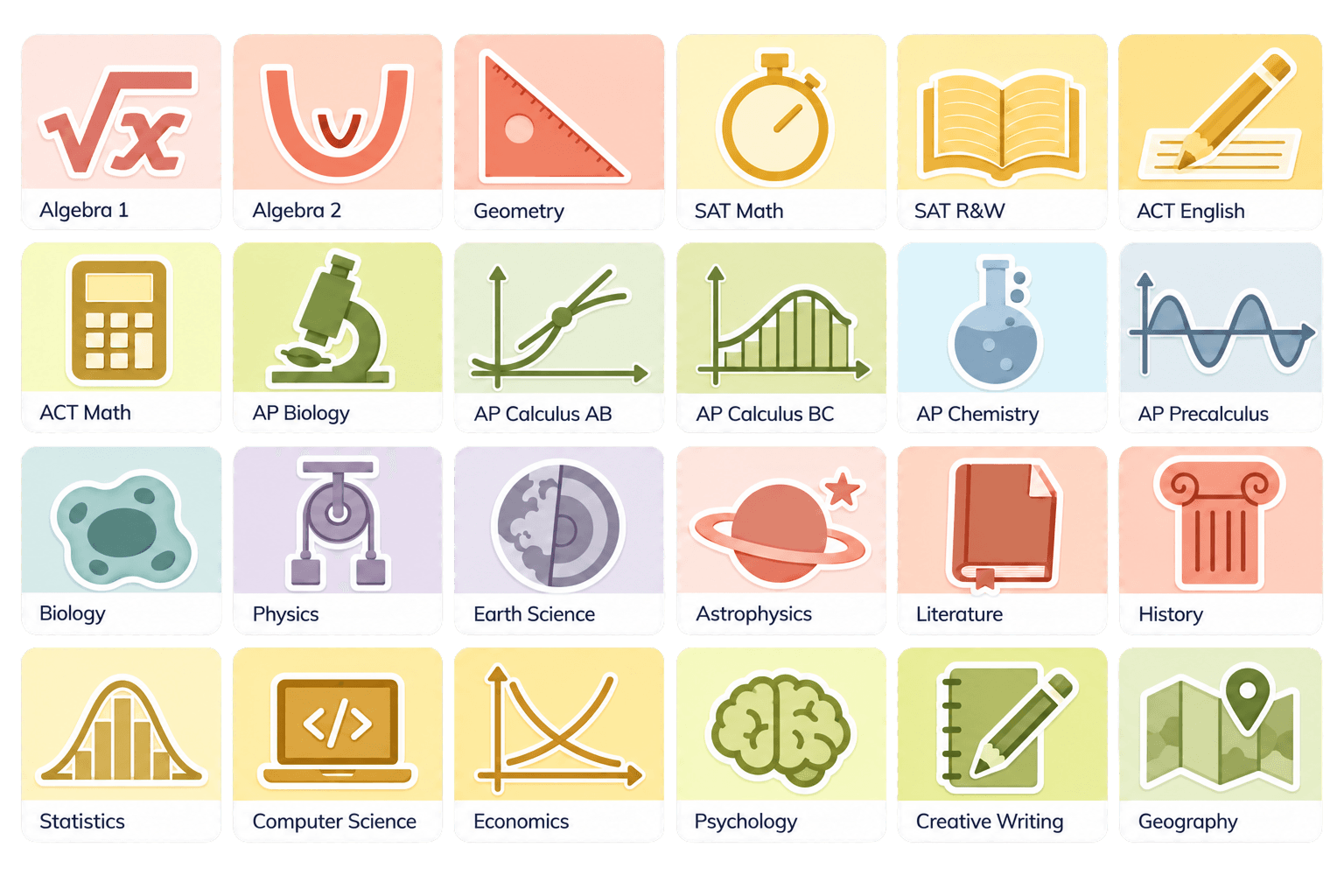
From middle-school math to AP exams to SAT/ACT prep. We also build custom plans matched to state standards and specific courses.
Revisit session summaries, session whiteboards, and uploads in one place.
Aristotle can read and navigate any PDFs and images with the learner. That includes textbooks with hundreds of pages!
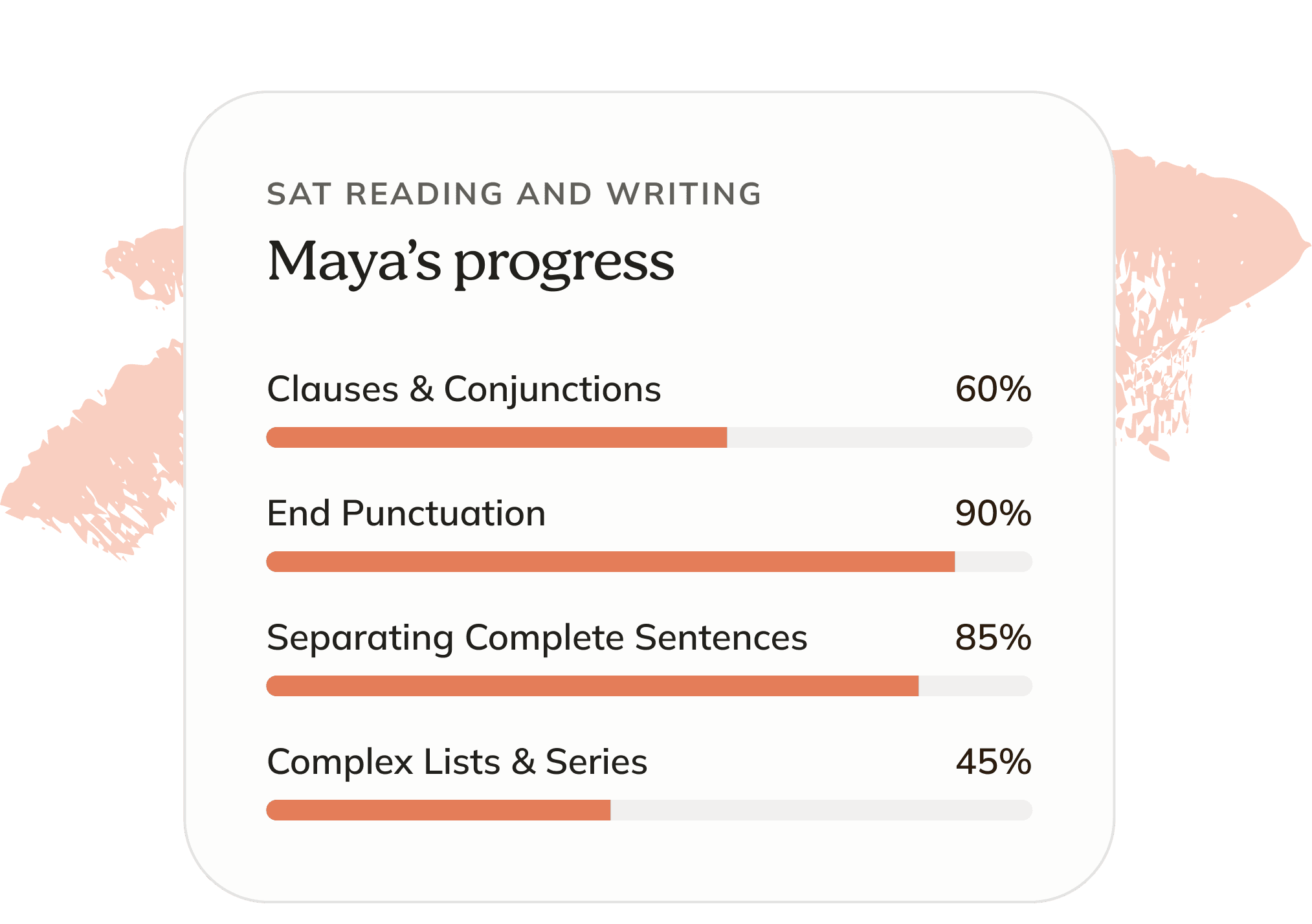
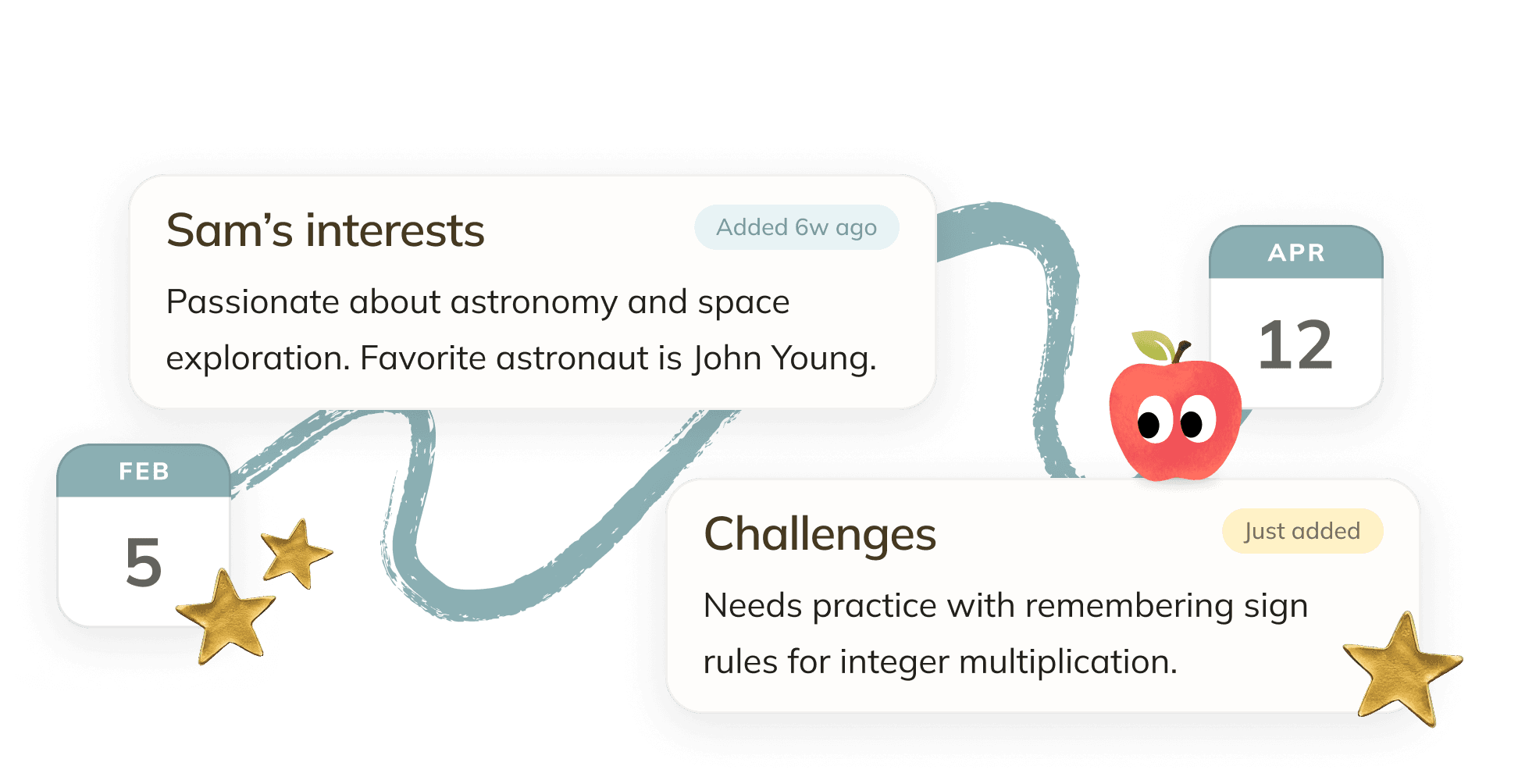
We break all subjects down into granular skills, then track mistakes and mastery on each one. Parents can see the whole picture at a glance.
Aristotle remembers every session: what you’ve covered, where you got stuck, how you like things explained. It picks up right where you left off.
The curriculum
Aristotle is designed to always know what to teach at exactly the right time.
Sample curriculum
* Click a topic to see the skills inside
Native Societies and European Contact, 1491 to 1607
Colonial North America, 1607 to 1754
Revolution and the New Nation, 1754 to 1800
The Early Republic and the Age of Jackson, 1800 to 1848
Expansion, Civil War, and Reconstruction, 1844 to 1877
Industry, the West, and the Gilded Age, 1865 to 1898
Empire, Reform, Depression, and World War, 1890 to 1945
Cold War America and the Struggle for Rights, 1945 to 1980
Conservatism, Globalization, and the Twenty-First Century, 1980 to the Present
Historical Thinking and Writing
AP US History tutoring curriculum130 skills across 10 units
Native Societies and European Contact, 1491 to 1607
How diverse native societies adapted to North America's environments before contact, why European states sailed west, what the Columbian Exchange did to both sides of the Atlantic, how the Spanish built an empire on native and African labor with a caste hierarchy, and how Europeans and native peoples misunderstood, borrowed from, resisted, and justified their treatment of one another. Topics: Native Societies Before European Contact, European Exploration and the Columbian Exchange, Labor and Caste in the Spanish Colonial System, Cultural Contact, Resistance, and Justification, Putting the Period Together.
Colonial North America, 1607 to 1754
How Spain, France, the Netherlands, and England built different kinds of colonies; why the British colonies split into distinct regions with different economies, labor systems, and politics; how an Atlantic trade network and imperial mercantilism tied the colonies to Britain; how colonists, native peoples, and enslaved Africans allied with, fought, and resisted one another; and how transatlantic religious and Enlightenment ideas made colonists both more British and more restless under British control. Topics: Models of European Colonization, Regions of the British Colonies, Transatlantic Trade and Imperial Control, Colonists and American Indians, Slavery in the British Colonies, Colonial Society, Ideas, and Britain, Putting the Period Together.
Revolution and the New Nation, 1754 to 1800
From the Seven Years' War to the election of 1800: how Britain's victory over France led to taxes and controls that united the colonies in resistance, the Enlightenment and religious ideas that justified independence, why the Patriots won, what the Revolution changed at home and abroad, the experiments with state constitutions and the Articles of Confederation, the compromises and debates that produced the Constitution and Bill of Rights, and the precedents, parties, foreign crises, frontier conflicts, and emerging national culture of the Washington and Adams years. Topics: The Seven Years' War and Its Aftermath, Taxation, Resistance, and Mobilization, Revolutionary Ideals, The War for Independence, Effects of the Revolution at Home and Abroad, State Constitutions and the Articles of Confederation, Making and Ratifying the Constitution, The Federalist Era, National Identity and Slavery's Regional Divide, Putting the Period Together.
The Early Republic and the Age of Jackson, 1800 to 1848
How the young republic grew into a market economy and a mass democracy: the policy fights and Supreme Court rulings of the Jefferson era, the Louisiana Purchase and the Monroe Doctrine, regional interests behind the American System and the Missouri Compromise, the market revolution's technologies and its effects on work, class, family, and migration, expanded white male suffrage and the Democrat-Whig party system, Indian removal, a Romantic national culture, the Second Great Awakening and the reform movements it inspired, and the cotton South's deepening commitment to slavery. Topics: The Jefferson Era, the Courts, and Louisiana, Regional Interests and the Federal Government, America on the World Stage, The Market Revolution, Democracy and the Age of Jackson, National Culture and the Second Great Awakening, The Age of Reform, The South and African American Life, Putting the Period Together.
Expansion, Civil War, and Reconstruction, 1844 to 1877
How the drive to the Pacific reopened the question of slavery and broke the nation apart: the motives and policies behind westward expansion, the Mexican-American War and its costs for Mexican Americans and native peoples, the Compromise of 1850, the immigration and free-labor arguments that divided the regions, the failure of the Kansas-Nebraska Act and Dred Scott to settle anything, the collapse of the party system and secession, how the Union mobilized and won, how Lincoln turned the war into a fight against slavery, and how Reconstruction rewrote the Constitution, briefly opened Southern politics to Black citizens, and then gave way to sharecropping, segregation, and disfranchisement. Topics: Manifest Destiny and Westward Expansion, The Mexican-American War and Its Aftermath, The Compromise of 1850, Immigration, Free Labor, and the Slavery Debate, The Failure of Compromise, Realignment, the Election of 1860, and Secession, Fighting and Winning the Civil War, Reconstruction, The End of Reconstruction and Its Legacy, Putting the Period Together.
Industry, the West, and the Gilded Age, 1865 to 1898
How the United States became an industrial nation after the Civil War and what that did to the people caught up in it: railroads, mines, and farms filling the West at the expense of native nations; the New South's limits; the technologies and corporate structures that produced steel, oil, and trusts; workers' fight with management; the new immigrants and the cities they built; a rising middle class and the Gospel of Wealth; critics who imagined alternatives; and the politics of tariffs, machines, laissez-faire, and the Populist demand for a government that served farmers and workers. Topics: Settling and Transforming the West, The New South, Technology and Big Business, Workers and Unions, Immigration and the City, Middle Class, Wealth, and Reform Ideas, Government, Parties, and Populism, Putting the Period Together.
Empire, Reform, Depression, and World War, 1890 to 1945
How the United States became a world power and a modern industrial democracy in half a century: the debate over empire and the Spanish-American War, the Progressive campaign to make government answer to industrial problems, entry into World War I and the retreat from Wilson's League, the consumer culture and bitter cultural fights of the 1920s, the Great Depression and the New Deal's limited welfare state, the isolationist 1930s, and the mobilization, victory, and moral questions of World War II that left the United States the most powerful nation on Earth. Topics: Imperialism and the Spanish-American War, The Progressive Era, World War I, The 1920s, The Great Depression and the New Deal, From Isolation to World War II, Putting the Period Together.
Cold War America and the Struggle for Rights, 1945 to 1980
How the United States lived as a superpower and argued with itself about what that required: containment and its swings between confrontation and detente, the Red Scare, the postwar boom that built the suburbs and the Sun Belt, mass culture and its critics, the civil rights movement from Brown to Black Power and the movements it inspired among women, Latinos, American Indians, and gay Americans, Vietnam and the protests it provoked, the Great Society's high tide of liberalism, the environmental and energy crises of the 1970s, and the conservative and evangelical revival that had reshaped politics by 1980. Topics: The Cold War Abroad, The Second Red Scare, Prosperity, Suburbs, and Mass Culture, Early Civil Rights, 1945 to 1960, The Vietnam War, Liberalism and the Great Society, Civil Rights Movements of the 1960s and 1970s, Environment, Energy, and the Conservative Turn, Putting the Period Together.
Conservatism, Globalization, and the Twenty-First Century, 1980 to the Present
The United States since 1980: the conservative ascendancy that began with Reagan and the policy and culture-war debates it left running, the end of the Cold War and the new interventions that followed, an economy remade by digital technology, globalization, and the shift from factories to services, the continued movement of people to the Sun Belt and the new immigration from Latin America and Asia, and the wars, civil-liberties questions, and energy and climate debates that followed the attacks of September 11, 2001. Topics: Reagan and the Conservative Era, The End of the Cold War, A Changing Economy, Migration and Immigration since 1980, Challenges of the Twenty-First Century, Putting the Period Together.
Historical Thinking and Writing
The skills that turn knowledge of events into historical thinking: reading a source for its point of view, purpose, audience, and situation; comparing what sources claim; placing a development in its context; explaining causation, continuity and change, and comparison; making a defensible claim and supporting it with evidence; and planning short answers and essays. Topics: Reading Sources, Historical Reasoning, Building an Argument, Short Answers and Essay Plans.
My son told me yesterday that we should cancel his human tutor, because Aristotle is doing a better job. The human tutor was $250/hour.

A few things you might wonder before getting started.
Aristotle's AP US History course tracks 130 skills across 10 units, mapped to the College Board framework, including Native Societies and European Contact, 1491 to 1607, Colonial North America, 1607 to 1754, and Revolution and the New Nation, 1754 to 1800. Every skill is linked to the skills it builds on, so the tutor always knows which parts of AP US History your child has mastered and what to teach next.
Check out our most recent blog posts.
This could be you
For homework, supporting your child, or anything you’ve always wanted to know more about, Aristotle makes it easy for anyone to learn out loud.