College Board framework
Every AP Music Theory skill maps to a unit and topic in the College Board's course and exam description, so sessions match what the exam tests.

AP Music Theory
Pioneered by Stanford AI researchers and learning scientists, Aristotle is the world's first voice-based AI tutor. Built for the AP Music Theory course and exam.
Trusted by families at









AP exam prep
Aristotle tracks 121 AP Music Theory skills, finds the ones costing your child points, and plans review back from the May exam.
Follows the College Board's units.
Your child talks it through. Aristotle coaches from the step that went wrong.
Any time before the exam. No booking.
See what's mastered and what's left.
Features
Talk things through, work side by side, and come back next time to a tutor who remembers where you left off.
Ask questions out loud, hear explanations in Aristotle’s voice, and interrupt whenever you need to.
Aristotle draws steps, diagrams, and images to help you learn visually.
Get practice problems tailored to the exact topics you’re struggling with.
From middle-school math to AP exams to SAT/ACT prep. We also build custom plans matched to state standards and specific courses.
Revisit session summaries, session whiteboards, and uploads in one place.
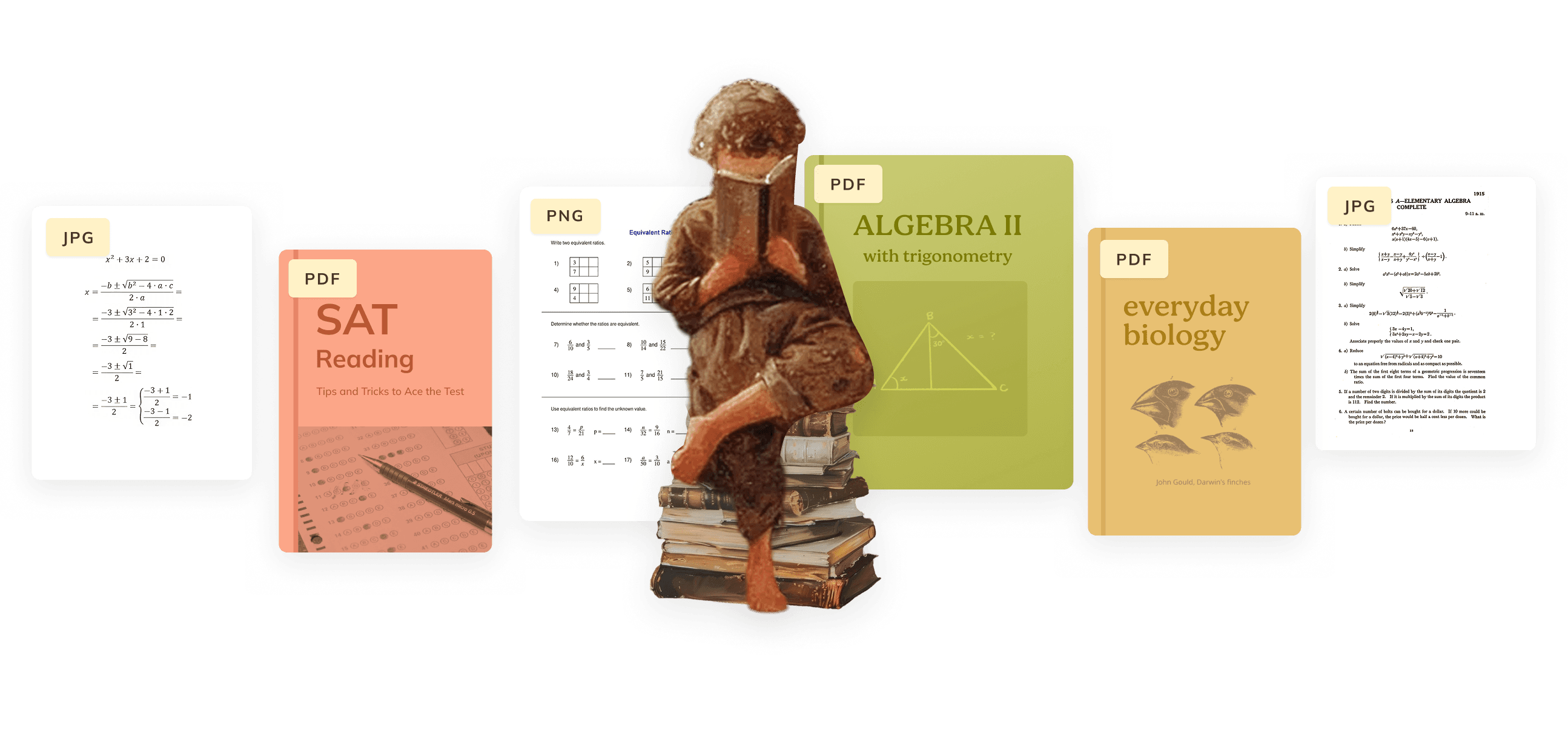
Aristotle can read and navigate any PDFs and images with the learner. That includes textbooks with hundreds of pages!
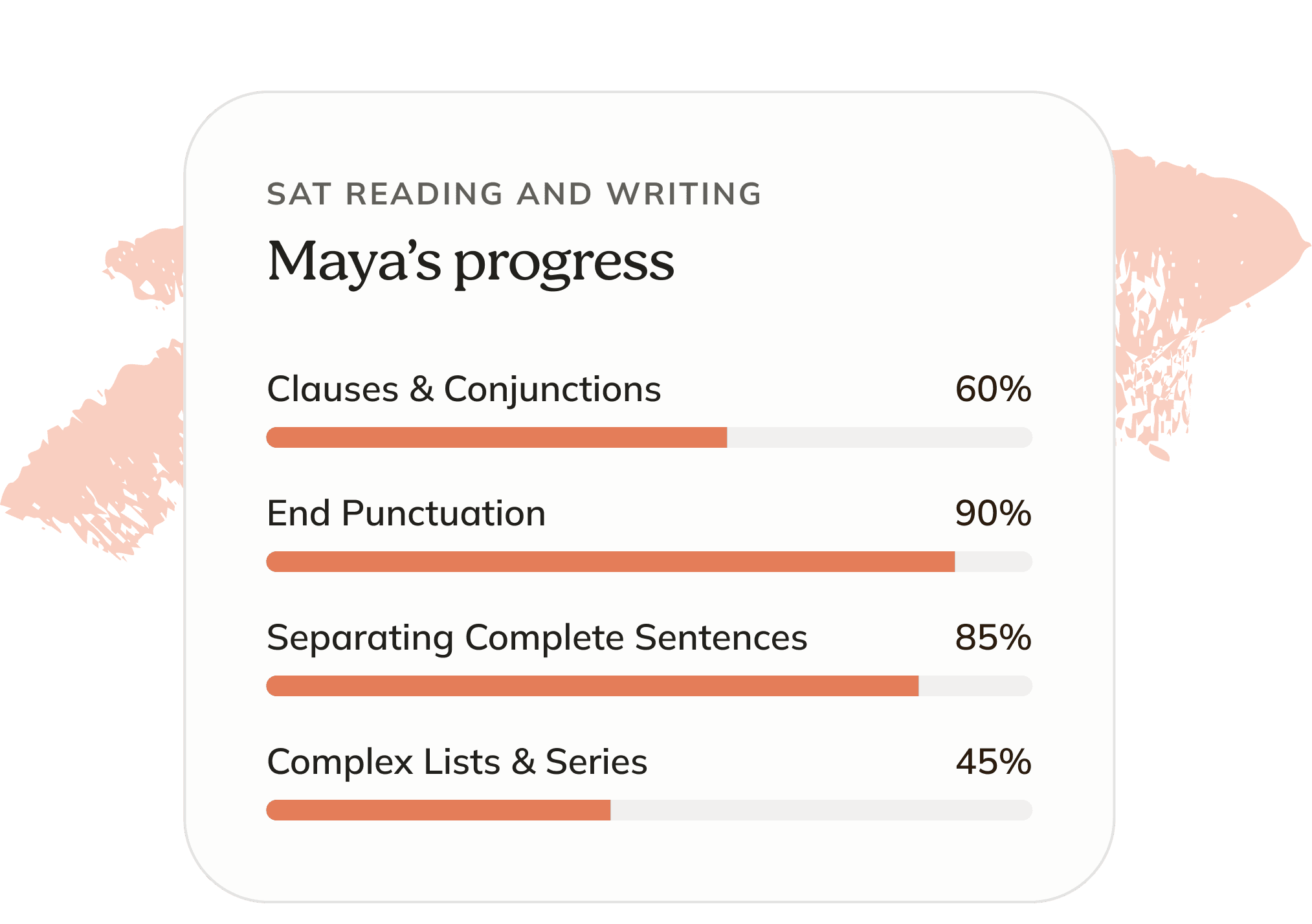
We break all subjects down into granular skills, then track mistakes and mastery on each one. Parents can see the whole picture at a glance.
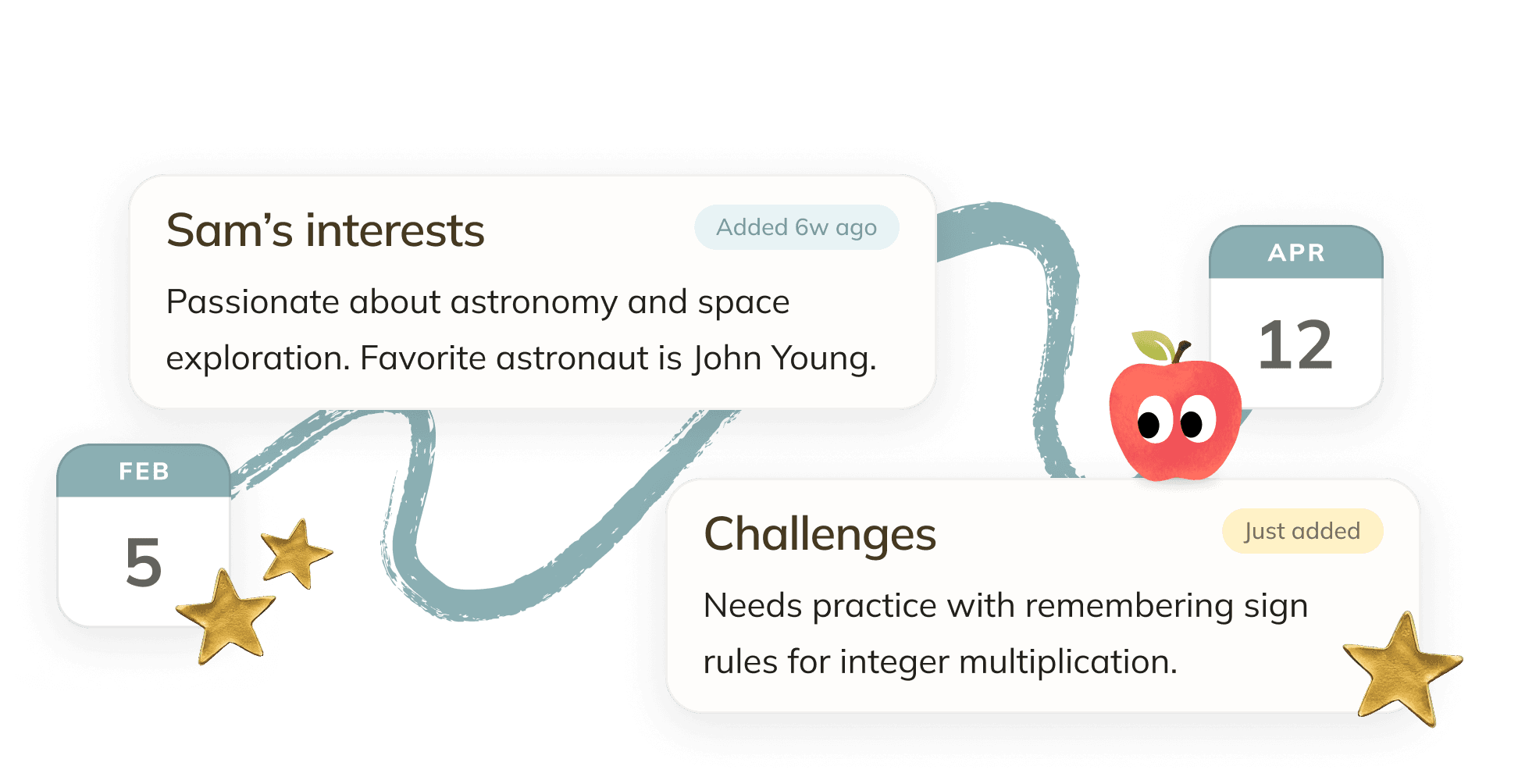
Aristotle remembers every session: what you’ve covered, where you got stuck, how you like things explained. It picks up right where you left off.
The curriculum
Aristotle is designed to always know what to teach at exactly the right time.
Sample curriculum
* Click a topic to see the skills inside
Music Fundamentals I: Pitch, Major Scales and Key Signatures, Rhythm, Meter, and Expressive Elements
Music Fundamentals II: Minor Scales and Key Signatures, Melody, Timbre, and Texture
Music Fundamentals III: Triads and Seventh Chords
Harmony and Voice Leading I: Chord Function, Cadence, and Phrase
Harmony and Voice Leading II: Chord Progressions and Predominant Function
Harmony and Voice Leading III: Embellishments, Motives, and Melodic Devices
Harmony and Voice Leading IV: Secondary Function
Modes and Form
AP Music Theory tutoring curriculum121 skills across 8 units
Music Fundamentals I: Pitch, Major Scales and Key Signatures, Rhythm, Meter, and Expressive Elements
This unit develops the notation used to represent pitch, duration, meter, and expression. Topics: Pitch and Pitch Notation, Rhythmic Values, Half Steps and Whole Steps, Major Scales and Scale Degrees, Major Keys and Key Signatures, Simple and Compound Beat Division, Meter and Time Signature, Rhythmic Patterns, Tempo, Dynamics and Articulation.
Music Fundamentals II: Minor Scales and Key Signatures, Melody, Timbre, and Texture
This unit extends pitch study to minor scales, key relationships, intervals, and transposition. Topics: Minor Scales: Natural, Harmonic, and Melodic, Relative Keys: Determining Relative Minor Key and Notating Key Signatures, Key Relationships: Parallel, Closely Related, and Distantly Related Keys, Other Scales: Chromatic, Whole-Tone, and Pentatonic, Interval Size and Quality, Interval Inversion and Compound Intervals, Transposing Instruments, Timbre, Melodic Features, Melodic Transposition, Texture and Texture Types, Texture Devices, Rhythmic Devices.
Music Fundamentals III: Triads and Seventh Chords
Triads and seventh chords organize pitches into harmony. Topics: Triad and Chord Qualities (M, m, d, A), Diatonic Chords and Roman Numerals, Chord Inversions and Figures: Introduction to Figured Bass, Seventh Chords, Seventh Chord Inversions and Figures.
Harmony and Voice Leading I: Chord Function, Cadence, and Phrase
Independent melodic lines combine to make a harmonic progression. Topics: Soprano-Bass Counterpoint, SATB Voice Leading, Harmonic Progression, Functional Harmony, and Cadences, Voice Leading with Seventh Chords, Voice Leading with Seventh Chords in Inversions.
Harmony and Voice Leading II: Chord Progressions and Predominant Function
Predominant harmonies expand the basic tonic-dominant-tonic phrase and create more choices for approaching a cadence. Topics: Adding Predominant Function IV (iv) and ii (ii°) to a Melodic Phrase, The vi (VI) Chord, Predominant Seventh Chords, The iii (III) Chord, Cadences and Predominant Function, Cadential 6/4 Chords, Additional 6/4 Chords.
Harmony and Voice Leading III: Embellishments, Motives, and Melodic Devices
Embellishing tones give individual voices motion within an underlying chord progression. Topics: Embellishing Tones: Identifying Passing Tones and Neighbor Tones, Embellishing Tones: Writing Passing Tones and Neighbor Tones, Embellishing Tones: Identifying Anticipations, Escape Tones, Appoggiaturas, and Pedal Points, Embellishing Tones: Identifying and Writing Suspensions; Identifying Upward-Resolving Suspensions, Motive and Motivic Transformation, Melodic Sequence, Harmonic Sequence.
Harmony and Voice Leading IV: Secondary Function
Secondary dominants and secondary leading-tone chords briefly give a non-tonic chord the role of a local tonic. Topics: Tonicization through Secondary Dominant Chords, Part Writing of Secondary Dominant Chords, Tonicization through Secondary Leading Tone Chords, Part Writing of Secondary Leading Tone Chords.
Modes and Form
Modes organize pitches around tonal centers with interval patterns beyond the familiar major and minor scales. Topics: Modes, Phrase Relationships, Common Formal Sections.
My son told me yesterday that we should cancel his human tutor, because Aristotle is doing a better job. The human tutor was $250/hour.

A few things you might wonder before getting started.
Aristotle's AP Music Theory course tracks 121 skills across 8 units, mapped to the College Board framework, including Music Fundamentals I: Pitch, Major Scales and Key Signatures, Rhythm, Meter, and Expressive Elements, Music Fundamentals II: Minor Scales and Key Signatures, Melody, Timbre, and Texture, and Music Fundamentals III: Triads and Seventh Chords. Every skill is linked to the skills it builds on, so the tutor always knows which parts of AP Music Theory your child has mastered and what to teach next.
Check out our most recent blog posts.

This could be you
For homework, supporting your child, or anything you’ve always wanted to know more about, Aristotle makes it easy for anyone to learn out loud.