College Board framework
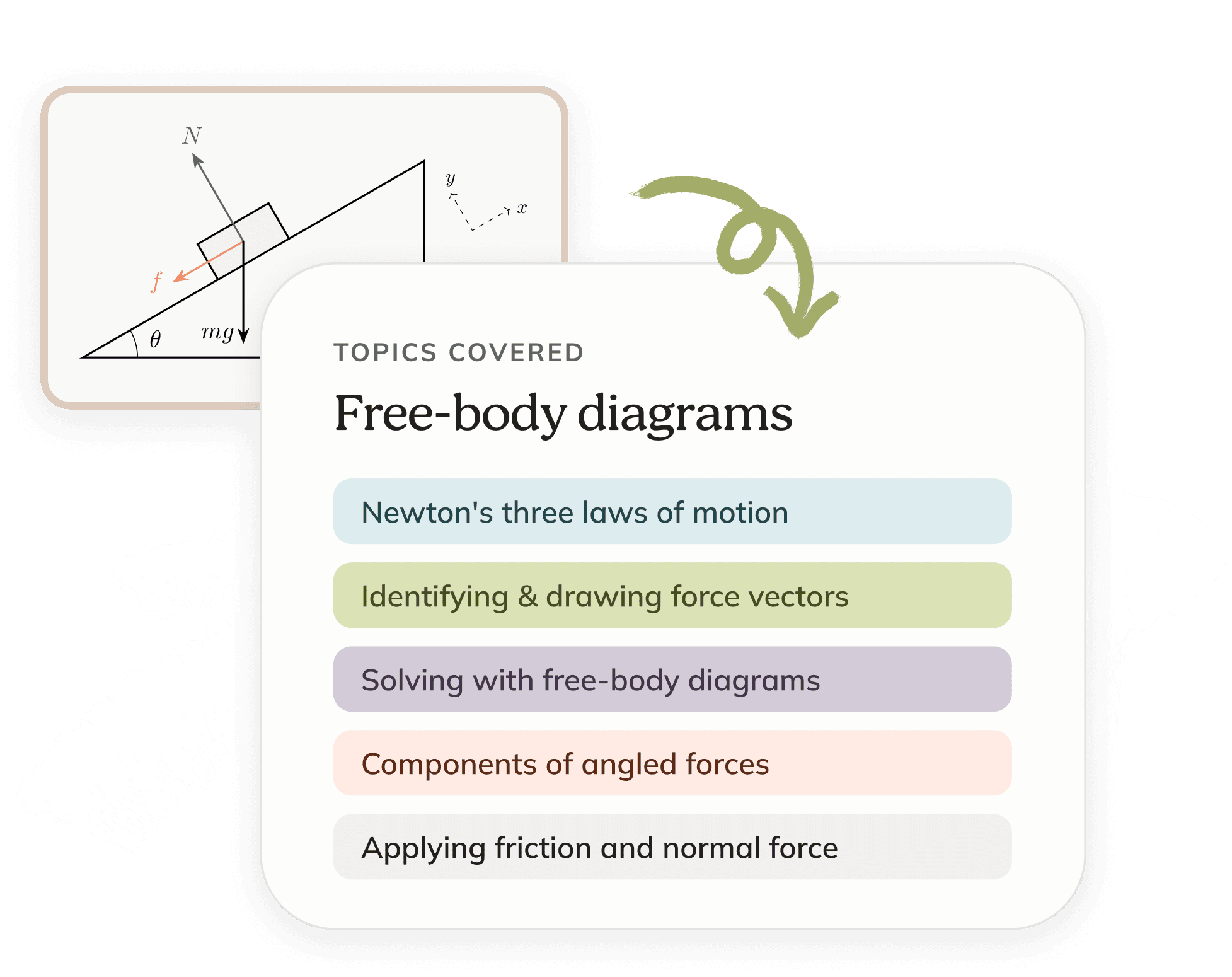
Every AP Microeconomics skill maps to a unit and topic in the College Board's course and exam description, so sessions match what the exam tests.

AP Microeconomics
Pioneered by Stanford AI researchers and learning scientists, Aristotle is the world's first voice-based AI tutor. Built for the AP Microeconomics course and exam.
Trusted by families at









AP exam prep
Aristotle tracks 93 AP Microeconomics skills, finds the ones costing your child points, and plans review back from the May exam.
Follows the College Board's units.
Your child talks it through. Aristotle coaches from the step that went wrong.
Any time before the exam. No booking.
See what's mastered and what's left.
Features
Talk things through, work side by side, and come back next time to a tutor who remembers where you left off.
Ask questions out loud, hear explanations in Aristotle’s voice, and interrupt whenever you need to.
Aristotle draws steps, diagrams, and images to help you learn visually.
Get practice problems tailored to the exact topics you’re struggling with.
From middle-school math to AP exams to SAT/ACT prep. We also build custom plans matched to state standards and specific courses.
Revisit session summaries, session whiteboards, and uploads in one place.
Aristotle can read and navigate any PDFs and images with the learner. That includes textbooks with hundreds of pages!
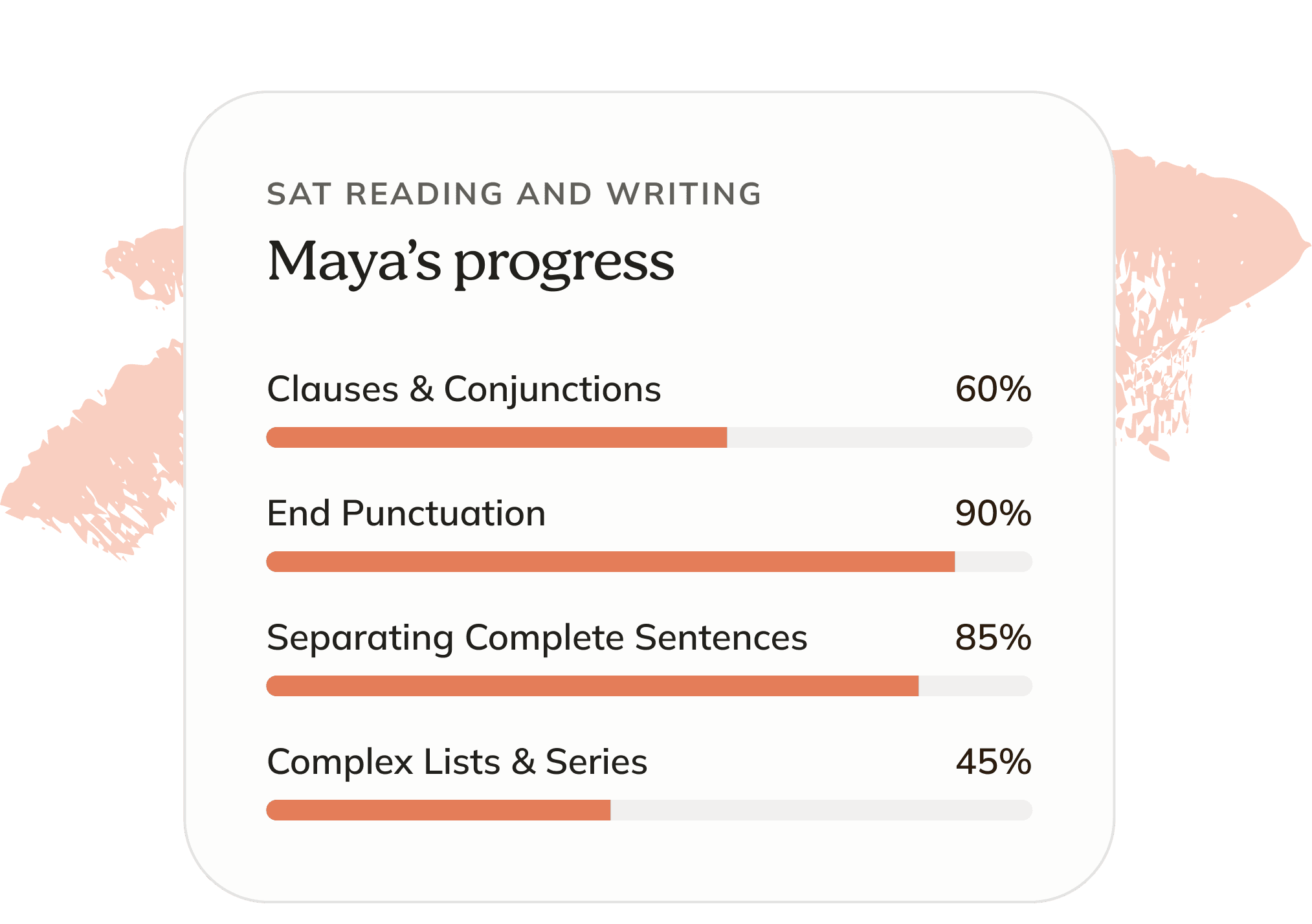
We break all subjects down into granular skills, then track mistakes and mastery on each one. Parents can see the whole picture at a glance.
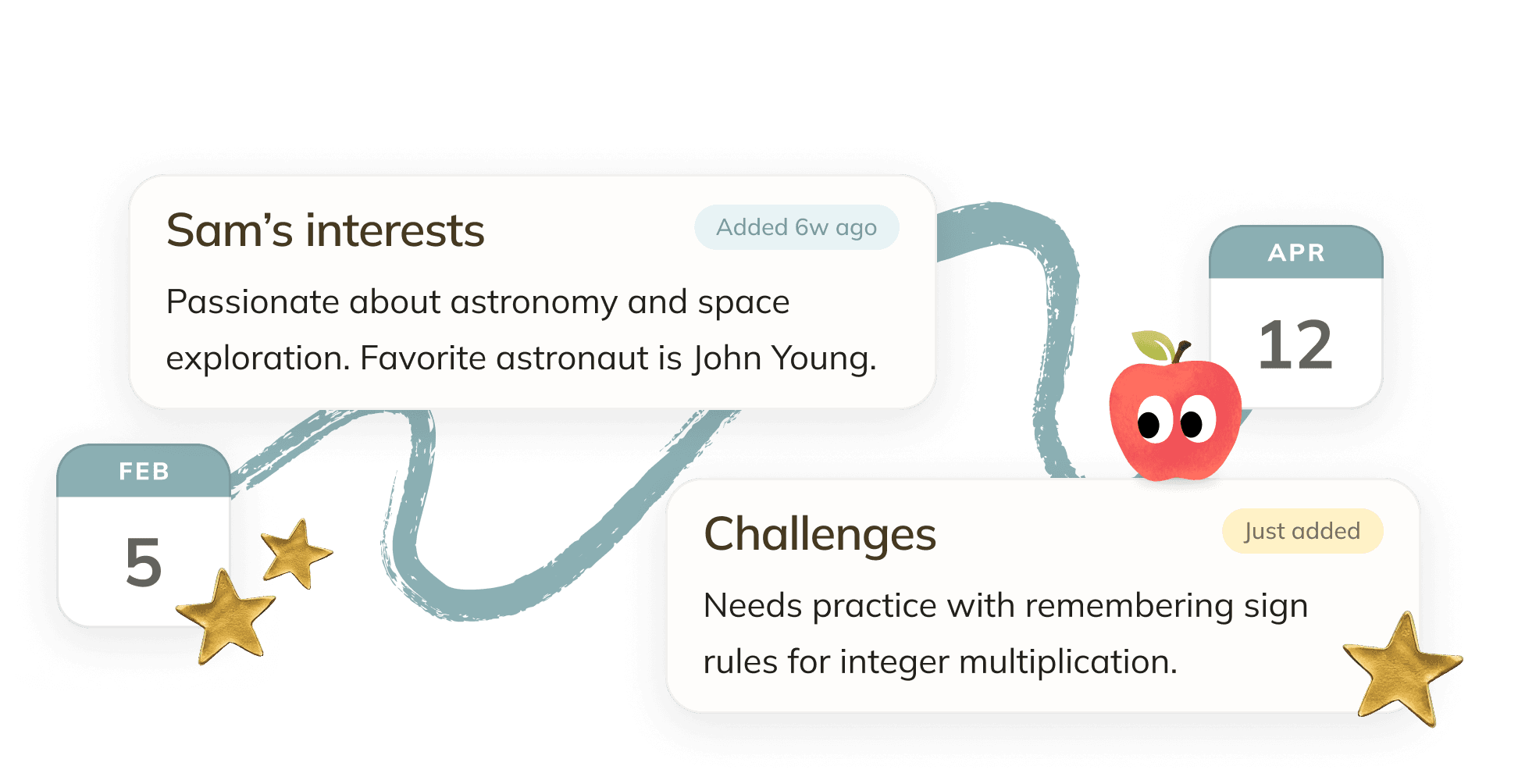
Aristotle remembers every session: what you’ve covered, where you got stuck, how you like things explained. It picks up right where you left off.
The curriculum
Aristotle is designed to always know what to teach at exactly the right time.
Sample curriculum
* Click a topic to see the skills inside
Basic Economic Concepts
Supply and Demand
Production, Cost, and the Perfect Competition Model
Imperfect Competition
Factor Markets
Market Failure and the Role of Government
AP Microeconomics tutoring curriculum93 skills across 6 units
Basic Economic Concepts
How economists reason about choices under scarcity: opportunity cost and the tradeoffs scarcity forces, the production possibilities curve as a model of tradeoffs, efficiency, and growth, comparative advantage and the gains from specialization and trade, and marginal cost-benefit analysis of rational decisions. Topics: Scarcity and Economic Systems, Production Possibilities Curve, Comparative Advantage and Gains from Trade, Cost-Benefit and Marginal Analysis.
Supply and Demand
How competitive markets set prices and quantities: the determinants of demand and supply and the difference between a shift and a movement, market equilibrium and how it changes, price elasticity of demand and supply and what makes demand elastic or inelastic, income and cross-price elasticities, consumer and producer surplus, and the effects of price ceilings, price floors, taxes, and subsidies. Topics: Demand, Supply, Elasticity, Market Equilibrium and Change, Consumer and Producer Surplus, Government Intervention in Markets, International Trade and Policy.
Production, Cost, and the Perfect Competition Model
How a firm decides what and how much to produce: the production function and diminishing marginal returns, the family of short-run and long-run cost curves, total, average, and marginal revenue, and how a profit-maximizing firm in a perfectly competitive market chooses output and responds to profit, loss, and the shutdown decision in the short run and to entry and exit in the long run. Topics: The Production Function, Production Costs, Profit and Profit Maximization, Perfect Competition.
Imperfect Competition
Markets where firms have power to set price: how a monopoly chooses price and output and the resulting inefficiency, the sources of market power, price discrimination, monopolistic competition and product differentiation in the short and long run, and oligopoly and strategic behavior including game theory and the payoff matrix. Topics: Market Power and Market Structures, Monopoly, Price Discrimination, Monopolistic Competition, Oligopoly and Game Theory.
Factor Markets
How the markets for labor and other inputs set resource prices and quantities: input demand as demand derived from the output market, marginal revenue product and the least-cost hiring rule, and how competitive and imperfectly competitive (monopsony) factor markets determine wages and the payments to land and capital. Topics: Factor Demand and Marginal Revenue Product, Factor Supply, Perfectly Competitive Factor Markets, Monopsony.
Market Failure and the Role of Government
When markets fail to allocate resources efficiently and how government responds: positive and negative externalities and the tools that correct them, public goods and common resources, the distribution of income and how inequality is measured, and how taxes, subsidies, and regulation trade off efficiency against equity. Topics: Socially Efficient and Inefficient Market Outcomes, Externalities, Public and Private Goods, The Effects of Government Intervention in Different Market Structures, Inequality.
My son told me yesterday that we should cancel his human tutor, because Aristotle is doing a better job. The human tutor was $250/hour.

A few things you might wonder before getting started.
Aristotle's AP Microeconomics course tracks 93 skills across 6 units, mapped to the College Board framework, including Basic Economic Concepts, Supply and Demand, and Production, Cost, and the Perfect Competition Model. Every skill is linked to the skills it builds on, so the tutor always knows which parts of AP Microeconomics your child has mastered and what to teach next.
Check out our most recent blog posts.

This could be you
For homework, supporting your child, or anything you’ve always wanted to know more about, Aristotle makes it easy for anyone to learn out loud.