College Board framework
Every AP Human Geography skill maps to a unit and topic in the College Board's course and exam description, so sessions match what the exam tests.
AP Human Geography
Pioneered by Stanford AI researchers and learning scientists, Aristotle is the world's first voice-based AI tutor. Built for the AP Human Geography course and exam.
Trusted by families at









AP exam prep
Aristotle tracks 110 AP Human Geography skills, finds the ones costing your child points, and plans review back from the May exam.
Follows the College Board's units.
Your child talks it through. Aristotle coaches from the step that went wrong.
Any time before the exam. No booking.
See what's mastered and what's left.
Features
Talk things through, work side by side, and come back next time to a tutor who remembers where you left off.
Ask questions out loud, hear explanations in Aristotle’s voice, and interrupt whenever you need to.
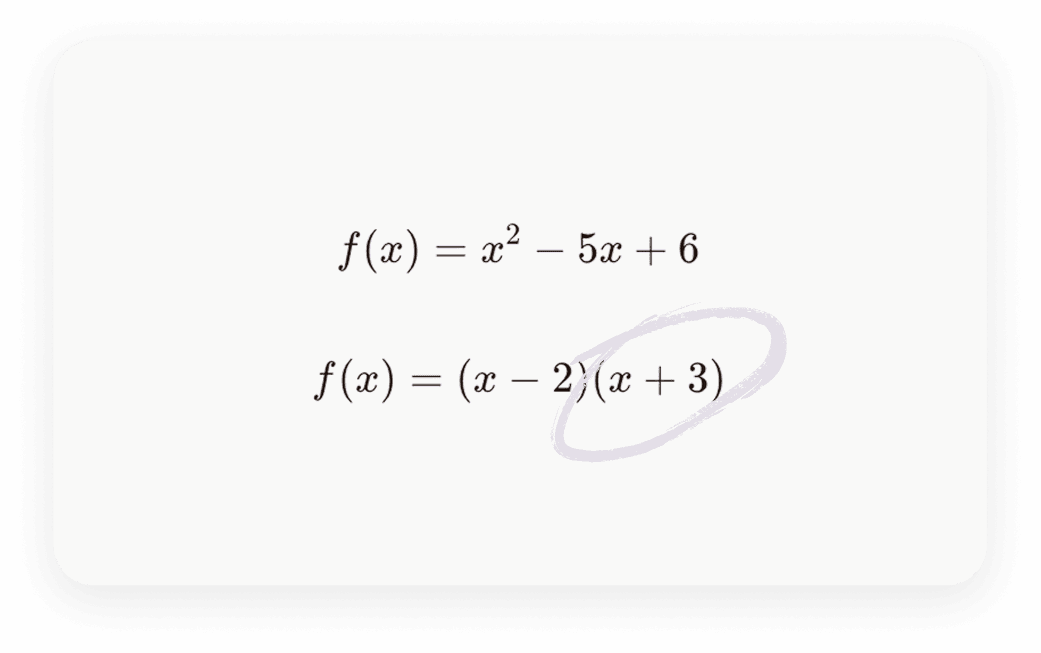
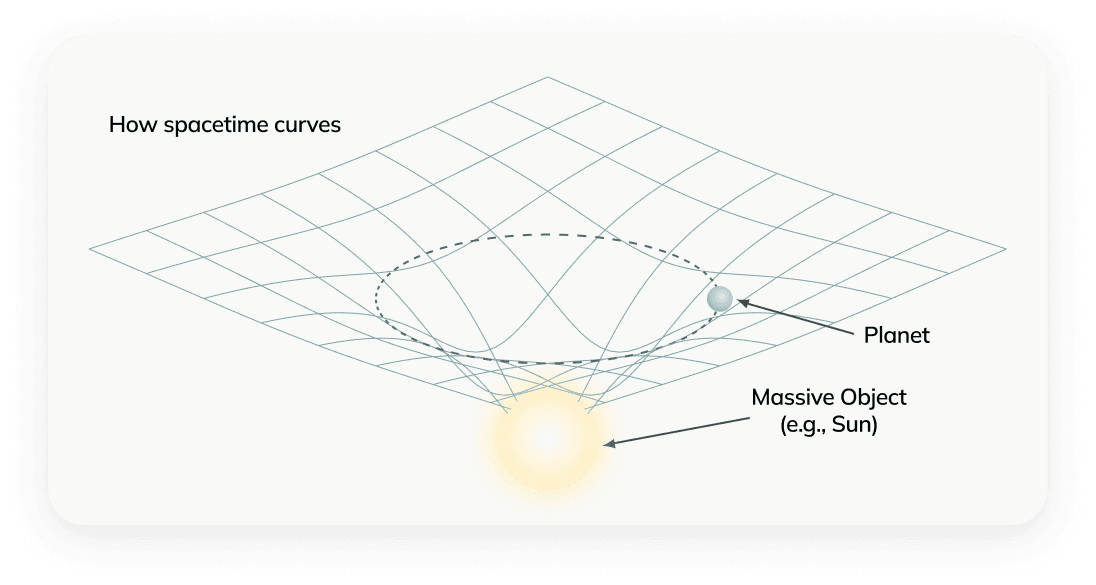
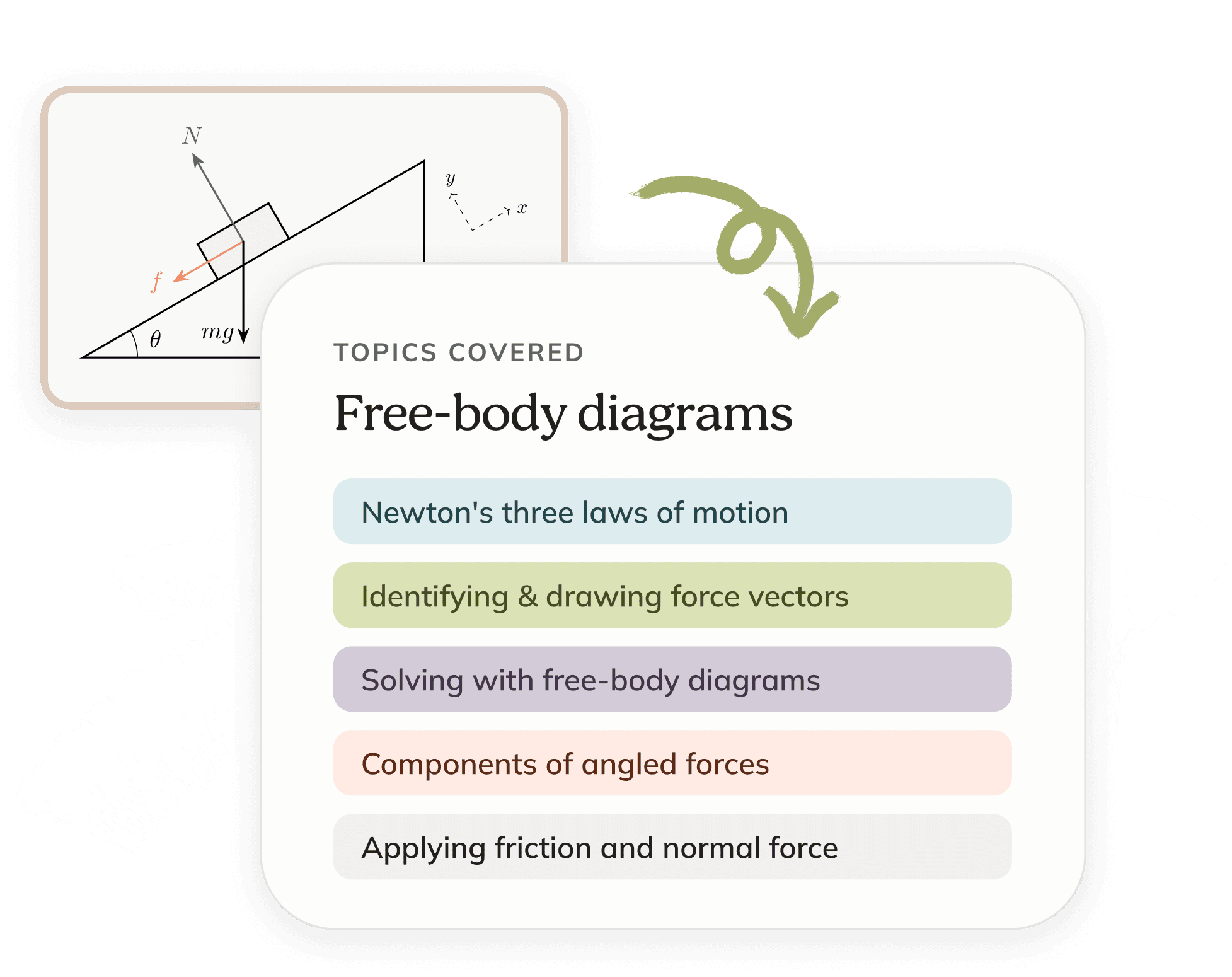
Aristotle draws steps, diagrams, and images to help you learn visually.
Get practice problems tailored to the exact topics you’re struggling with.
From middle-school math to AP exams to SAT/ACT prep. We also build custom plans matched to state standards and specific courses.
Revisit session summaries, session whiteboards, and uploads in one place.
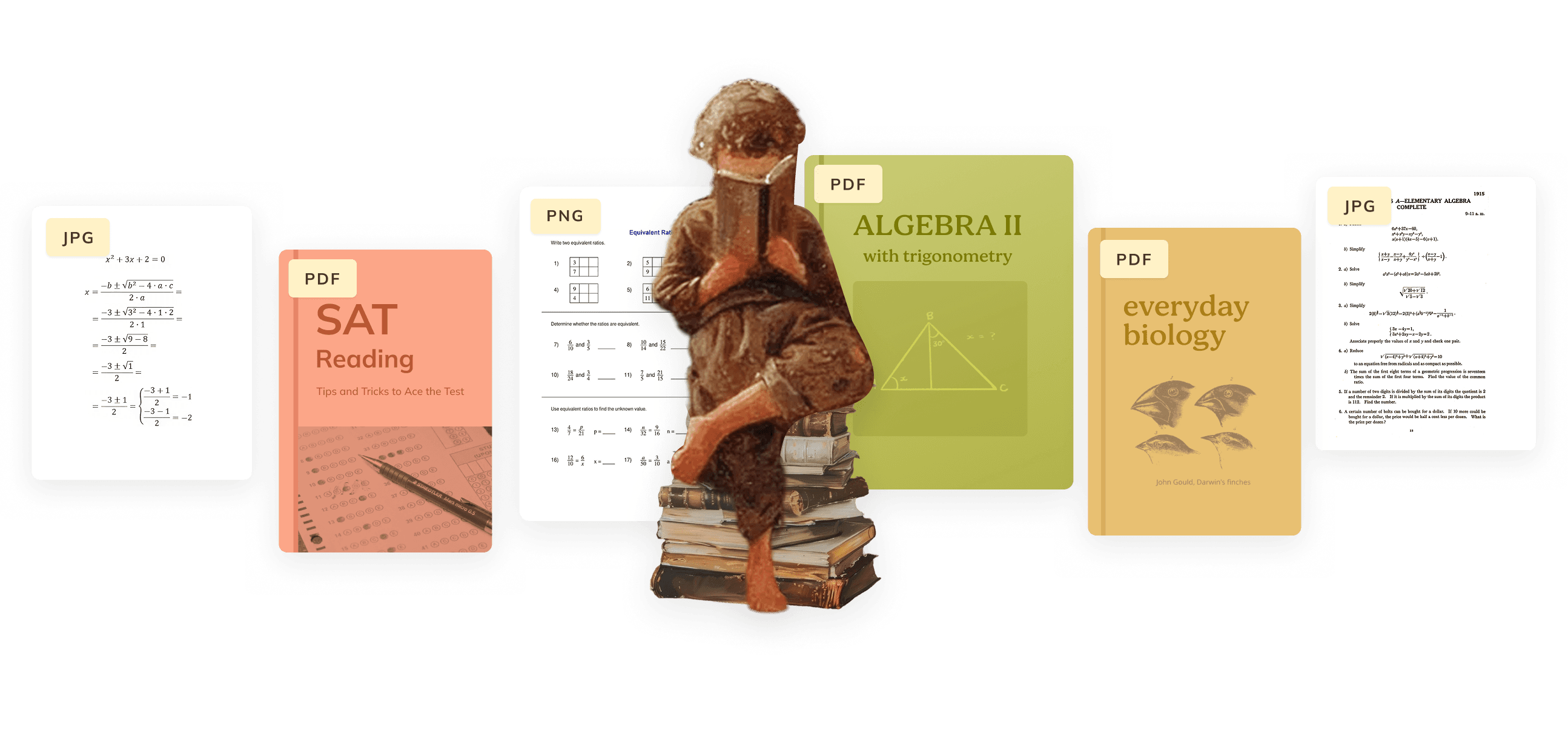
Aristotle can read and navigate any PDFs and images with the learner. That includes textbooks with hundreds of pages!
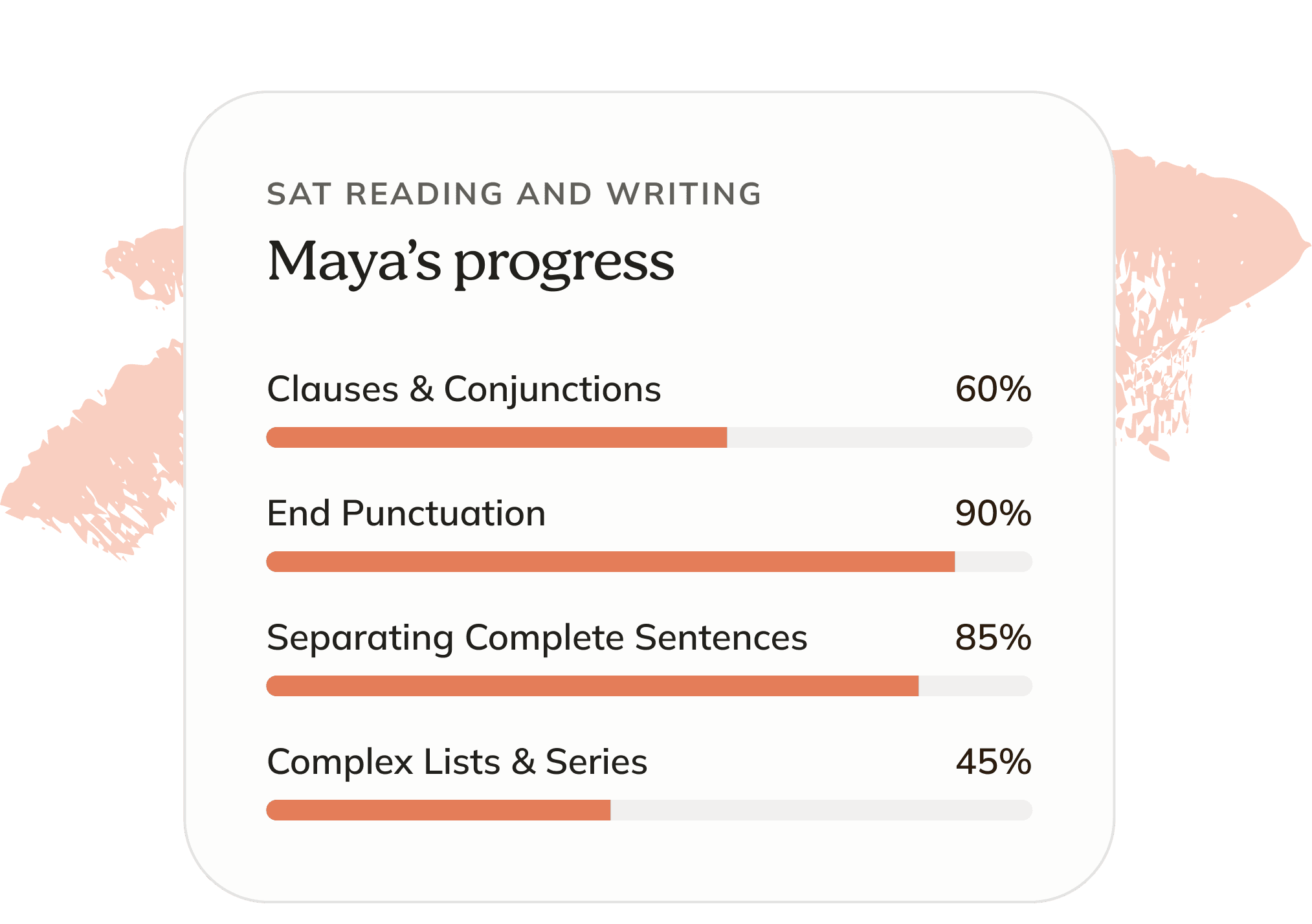
We break all subjects down into granular skills, then track mistakes and mastery on each one. Parents can see the whole picture at a glance.
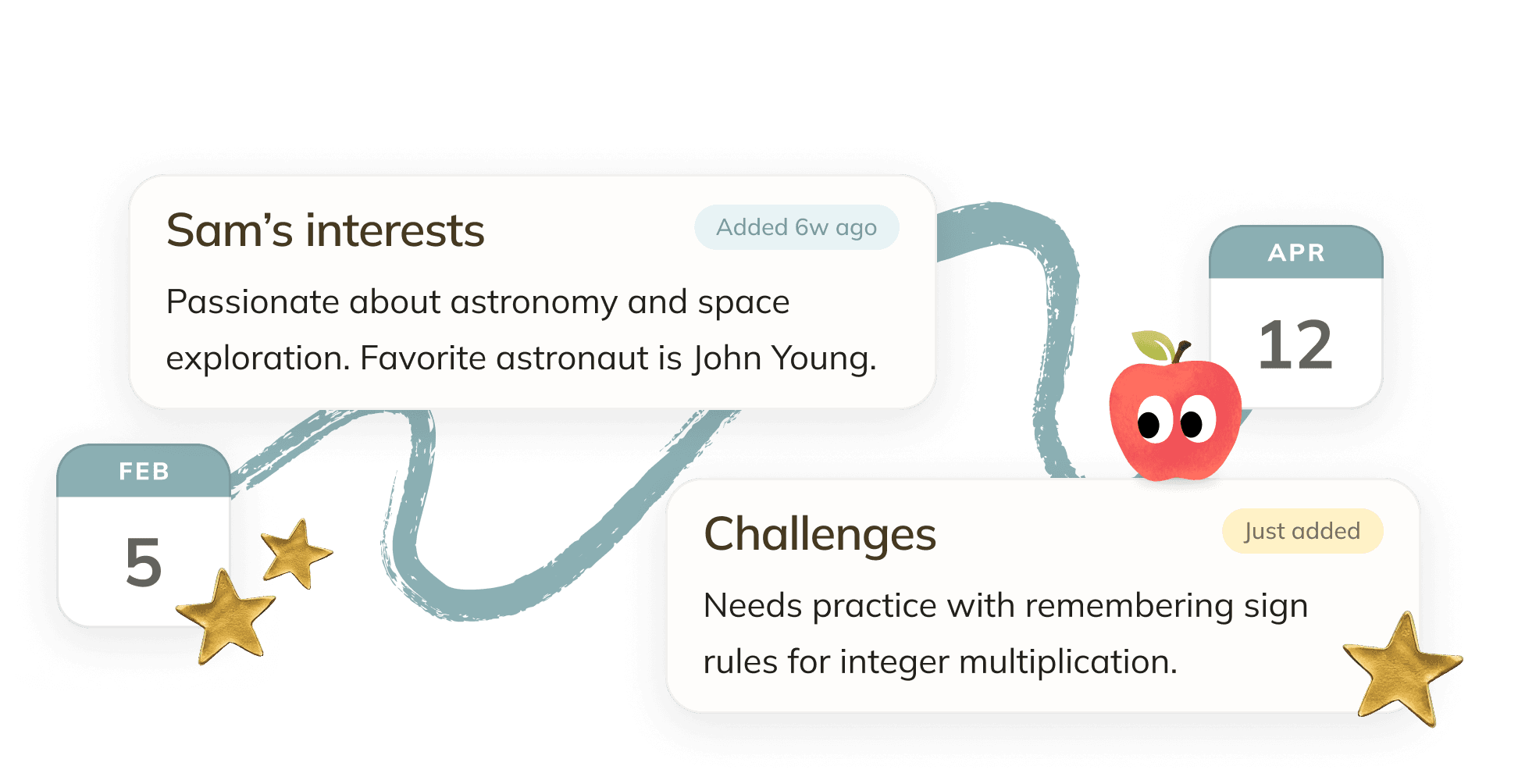
Aristotle remembers every session: what you’ve covered, where you got stuck, how you like things explained. It picks up right where you left off.
The curriculum
Aristotle is designed to always know what to teach at exactly the right time.
Sample curriculum
* Click a topic to see the skills inside
Thinking Geographically
Population and Migration
Culture and Its Spread
Political Geography
Agriculture and Rural Land
Cities and Urban Land Use
Industry and Economic Development
AP Human Geography tutoring curriculum110 skills across 7 units
Thinking Geographically
The toolkit the rest of the course uses: reading and choosing maps and projections, knowing where geographic data comes from and how decisions made with it reshape places, the core spatial concepts (location, place, distance decay, time-space compression), how people and environments shape each other, what changing the scale of analysis reveals or hides, and how regions are defined. Topics: Maps and Projections, Geographic Data and Its Uses, Spatial Concepts, People and the Environment, Scales of Analysis, Regional Analysis, Geographic Reasoning Skills.
Population and Migration
Where people live and why, how populations are measured and compared (density, composition, birth and death rates, natural increase), the models that explain growth and decline (demographic transition, epidemiological transition, Malthus and his critics), the policies and social changes that shape fertility and aging, and why people migrate, what kinds of migration exist, and what migration does to the places people leave and the places they go. Topics: Where People Live, Population Composition, Population Growth and Decline, Policies, Women, and Aging, Migration.
Culture and Its Spread
What culture is and how geographers read it in the landscape: culture traits, attitudes toward cultural difference, the layered evidence of past and present groups in a cultural landscape, and how ethnicity, gender, and indigenous identity shape the use of space. Topics: What Culture Is, Cultural Landscapes, How Culture Spreads, Language and Religion.
Political Geography
How the world is divided into states and why the lines sit where they do: the kinds of political entities (nations, states, nation-states, stateless nations, multinational and multistate arrangements), sovereignty and self-determination, the colonial and independence processes that drew today's boundaries, and how power is expressed over land, people, and resources. Topics: States, Nations, and Power, Boundaries, Governance, Devolution, and Sovereignty, Centrifugal and Centripetal Forces.
Agriculture and Rural Land
How people farm and how farming shapes the countryside: the intensive and extensive systems that fit different climates, rural settlement patterns and the survey systems that divided the land, where farming began and how crops and animals spread, the second agricultural revolution and the Green Revolution, and the economic forces (subsistence versus commercial production, land costs, economies of scale, commodity chains, the von Thunen model, global supply chains and export dependence) that decide what is grown where. Topics: Farming Systems and Physical Geography, Rural Settlement and Land Survey, Origins and Diffusion of Agriculture, Agricultural Revolutions, Economic Forces in Agriculture, The von Thunen Model, The Global Food System, Consequences of Agricultural Practices, Contemporary Agriculture and Food.
Cities and Urban Land Use
Why cities exist where they do and how they grow: site and situation, the forces behind urbanization and suburbanization, megacities and metacities, edge cities and exurbs, and the world cities that steer globalization. Topics: Why Cities Grow Where They Do, Megacities, Suburbs, and Sprawl, Cities and Globalization, Size and Spacing of Cities, Internal Structure of Cities, Density, Land Use, and Infrastructure, Sustainable Urban Design, Reading Urban Data, Challenges of Urban Change, Urban Sustainability.
Industry and Economic Development
How industrialization began and spread and why development is uneven across the world: the Industrial Revolution and its links to population growth, cities, class, and imperialism; the economic sectors and the factors (labor, transport, break-of-bulk points, least cost theory, markets, resources) that locate manufacturing in core, semiperiphery, and periphery; how development is measured with economic and social indicators, the Human Development Index, and the Gender Inequality Index; how women's roles change with development; the theories (Rostow, Wallerstein, dependency, commodity dependence) that explain spatial variation in development; the basis of trade and the neoliberal organizations, tariffs, debt crises, and lending agencies that tie economies together; the restructuring produced by outsourcing, new manufacturing zones, and post-Fordist production; and the sustainable development policies, ecotourism, and global goals meant to remedy industrialization's environmental costs. Topics: The Industrial Revolution, Economic Sectors and Industrial Location, Measuring Development, Women and Economic Development, Theories of Development, Trade and the World Economy, Restructuring of the Global Economy, Sustainable Development.
My son told me yesterday that we should cancel his human tutor, because Aristotle is doing a better job. The human tutor was $250/hour.

A few things you might wonder before getting started.
Aristotle's AP Human Geography course tracks 110 skills across 7 units, mapped to the College Board framework, including Thinking Geographically, Population and Migration, and Culture and Its Spread. Every skill is linked to the skills it builds on, so the tutor always knows which parts of AP Human Geography your child has mastered and what to teach next.
Check out our most recent blog posts.
This could be you
For homework, supporting your child, or anything you’ve always wanted to know more about, Aristotle makes it easy for anyone to learn out loud.